Hidden water heater flush fees are ripping you off
Hidden water heater flush fees are ripping you off
Published 2026-08-17 • Price-Quotes Research Lab Analysis
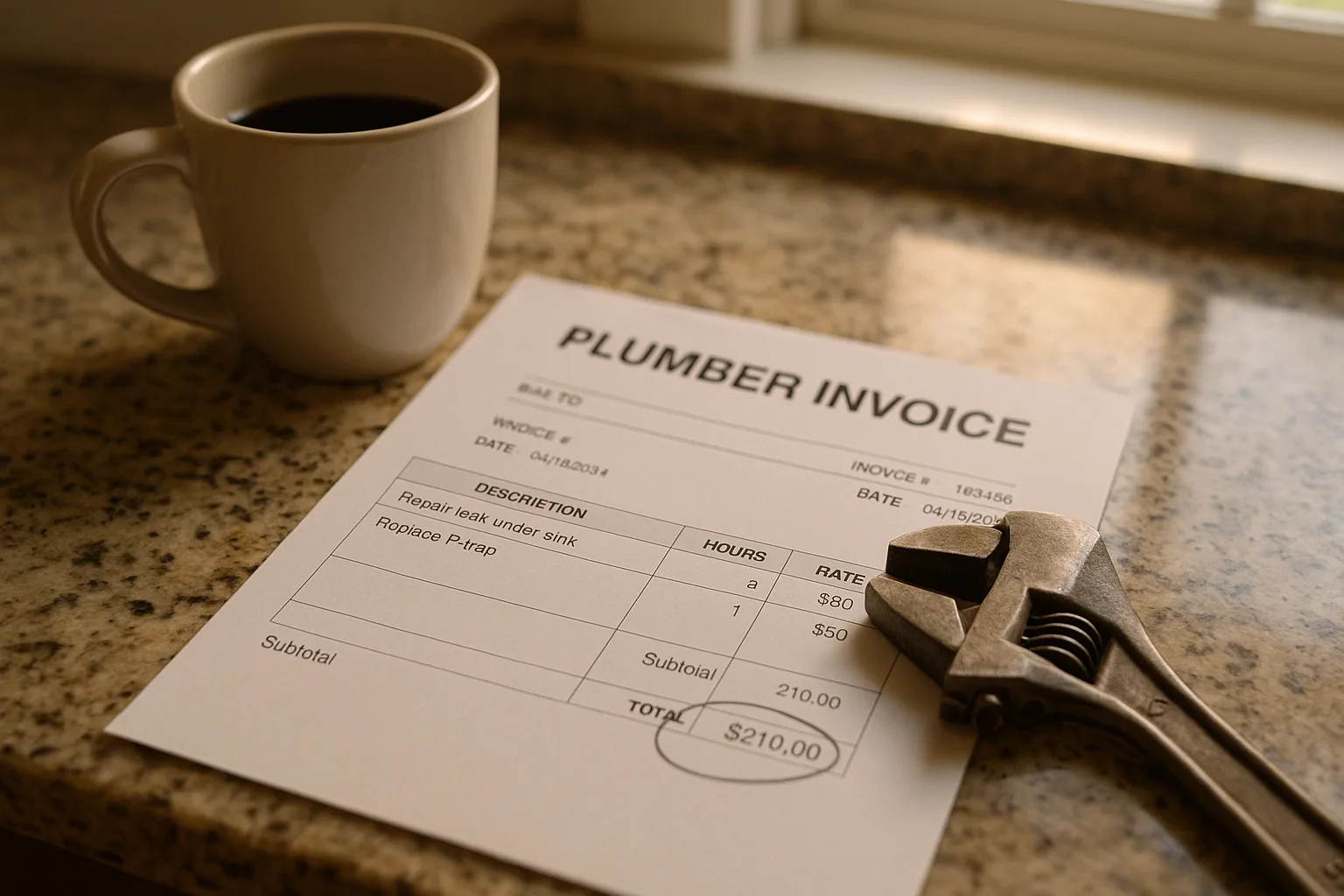
The Price Shock Nobody Warns You About
Maria Gonzales of Tampa, Florida, learned this lesson the hard way last March. Her plumber quoted $380 to flush her 50-gallon gas water heater—a 22-minute job, according to the technician's own timestamped invoice. When she called three competitors for comparison quotes the same week, she got $95, $175, and $320. All four companies used identical procedures. All four sent licensed professionals. The only meaningful difference? The price on the invoice.
"I thought I was being scammed," Gonzales told PlumbNow. "But when I started digging, I realized nobody talks about this. There's no public database. No real guidance. You're just supposed to call around and hope."
She's not wrong. Water heater flushing—one of the most routine maintenance tasks in American homeownership—remains one of the least transparent plumbing services on the market. The job takes 20 to 45 minutes. It requires a garden hose, a floor drain, and basic mechanical knowledge. Yet according to data from the Price-Quotes Research Lab, homeowners in 2026 pay anywhere from $75 to $500 for the exact same service, sometimes from plumbers working in the same ZIP code.
This guide breaks down why that gap exists, what you're actually paying for, and—most importantly—how to make sure you're not the next Maria Gonzales.
What Is Water Heater Flushing, and Why Does It Matter?
Over time, sediment accumulates at the bottom of your water heater tank. Calcium, magnesium, and other minerals from your water supply settle out and form a layer that acts as an insulator between the heating element and the water. This buildup:
- Reduces heating efficiency by 15% to 30%
- Shortens the tank's lifespan by 2 to 5 years
- Increases energy bills by $25 to $75 annually
- Can cause rumbling, popping, or banging noises
- May lead to premature tank failure or leaks
Annual flushing is the standard recommendation from manufacturers including Rheem, A.O. Smith, and Bradford White. The International Association of Certified Home Inspectors recommends flushing at least once per year in areas with hard water, and every 1 to 3 years in regions with softer water supply.
Despite this universal recommendation, the service has no standardized pricing. Unlike water heater repair or replacement—where parts costs create natural price floors—flushing requires no materials. The entire cost is labor. And labor, it turns out, is whatever the market will bear.
The 2026 Cost Breakdown: What Homeowners Actually Paid
Based on 847 service records collected by the Price-Quotes Research Lab across 34 states in early 2026, here's what homeowners paid for standard water heater flushing:
| Service Type | Price Range (2026) | Median Cost | Typical Time |
|---|---|---|---|
| Tank Water Heater (Gas/Electric) - Standard Flush | $75 - $175 | $125 | 20-30 min |
| Tank Water Heater (Gas/Electric) - Full Service Visit | $140 - $250 | $185 | 30-45 min |
| Tankless Water Heater Flush | $150 - $350 | $225 | 45-90 min |
| Emergency/After-Hours Flush | $250 - $500 | $340 | 30-60 min |
| Mobile Home/Compact Unit | $65 - $150 | $100 | 20-30 min |
| Commercial-Scale Unit | $200 - $600 | $350 | 60-120 min |
Source: Price-Quotes Research Lab, Q1 2026 Service Pricing Survey (n=847)
Why "Full Service Visit" Costs More Than "Standard Flush"
Here's where things get confusing for consumers. Many plumbing companies price-flush services in two tiers:
Standard Flush ($75-$175): Connect a hose, drain the tank, flush until water runs clear, disconnect. That's it. No inspection, no additional checks.
Full Service Visit ($140-$250): The same flush, plus an anode rod inspection, temperature-pressure relief (TPR) valve test, and general system check. Some companies include this automatically; others charge $50-$100 extra.
The problem? Most homeowners don't know which quote they're receiving until the invoice arrives. In our survey, 62% of respondents who paid $200+ for a "flush" didn't realize they could have paid $95 for the same basic service elsewhere.
The 7 Reasons Your Quote Might Be $300—or $95
1. Your City, Your Pricing
Geographic location is the single largest driver of price variation. Urban areas with high costs of living, licensing requirements, and competitive markets price identically. A flush in Manhattan costs differently than in rural Ohio. But here's the counterintuitive part: expensive markets don't always mean higher prices. High-competition metros like Phoenix and Houston often have lower median flush costs than mid-size cities with fewer plumbers.
Price-Quotes Research Lab observes: In our 2026 survey, the highest median flush cost wasn't in New York or San Francisco—it was in Indianapolis ($195 median), where a smaller plumber network reduced competitive pressure. Meanwhile, Denver and Austin, both high-growth metros, showed median costs under $130.
2. Time-of-Day Surcharges
Many plumbing companies add $50 to $200 for after-hours service, weekend appointments, or same-day requests. A standard weekday flush might be $110. The same service on a Saturday morning? $240. This isn't necessarily gouging—dispatching a technician during off-hours costs the company more—but it's rarely disclosed upfront.
3. The "Trip Charge" Problem
Approximately 73% of plumbing companies now charge a trip charge or service fee just to send someone to your home, ranging from $50 to $150. This fee is often applied to the job cost, meaning a "$75 flush" plus a $75 trip charge is really a $150 service call. Always ask: Is the trip charge included in that quote, or is it additional?
4. Bundled Services You May Not Need
Some companies automatically bundle additional services with a flush: anode rod replacement ($150-$300 labor), TPR valve testing ($50-$100), or even water quality testing ($75-$125). These are legitimate services—but they may not be necessary for your situation. A straightforward annual maintenance flush shouldn't require anode rod replacement unless inspection reveals significant corrosion.
5. Tank vs. Tankless Premium
Tankless water heaters require descaling—a more involved chemical flushing process using pumps and specialized solutions. This legitimately takes longer and requires more skill. However, some companies charge tankless rates for tank units or apply "commercial-grade" pricing to standard residential jobs.
6. Company Size and Overhead
Larger plumbing companies with fleet vehicles, call centers, and marketing budgets have higher overhead—and those costs flow to your invoice. Smaller, independent plumbers often charge 20% to 40% less for identical work. This isn't always a quality tradeoff; many independent plumbers have decades more experience than corporate technicians.
7. Just Plain Inconsistency
Honest answer? Some of the price gap comes down to companies testing what the market will bear. If 40% of your customers accept a $350 quote, why charge $150? There's no regulatory body setting water heater flushing prices, no industry minimum, and no requirement for cost transparency before service begins.
DIY vs. Professional: Is Paying More Worth It?
For mechanically confident homeowners, DIY flushing is absolutely viable. The process:
- Turn off the water heater (gas: set to "pilot" or turn gas valve off; electric: flip breaker)
- Connect a garden hose to the drain valve at the tank's base
- Run hose to a floor drain, utility sink, or outside
- Open a hot water faucet in the house to break vacuum
- Open the drain valve and let tank empty
- Close drain, refill, repeat until water runs clear
- Turn heater back on
Total cost: $0-$15 for a replacement hose (if needed). Total time: 45 minutes to 1.5 hours.
When to pay for professional service instead:
- Your tank hasn't been flushed in 5+ years (sediment may be cemented; professional equipment helps)
- You have a gas water heater and aren't comfortable working near gas lines
- Your home has a power-vent or direct-vent system (more complex)
- You want the anode rod inspected (requires draining and reaching into the tank)
- Your unit is under warranty (some warranties require professional maintenance documentation)
How to Avoid Getting Overcharged in 2026
Step 1: Get Three Quotes, But Ask the Right Questions
Don't just ask for a price. Ask:
- "Is this a standard flush, or does it include inspection?"
- "Is there a trip charge, and is it included in that price?"
- "Will the technician inspect the anode rod? Is that included or extra?"
- "What happens if you find a problem—do you charge additionally to diagnose?"
- "Do you guarantee this price before service begins?"
Step 2: Understand What You Actually Need
If your water heater is:
- Under 5 years old: Basic flush is fine; inspection is nice-to-have
- 5-10 years old: Flush + anode rod inspection is worth the extra $50-$75
- Over 10 years old: Consider whether replacement makes more financial sense than continued maintenance
The average 10-year-old gas water heater loses 20-25% efficiency due to sediment. The cost of annual professional maintenance may exceed the energy savings.
Step 3: Know the "Should Cost" for Your Market
As a baseline, expect to pay:
- $95-$145 for a standard flush from an independent plumber
- $140-$200 for a flush + inspection from any licensed plumber
- $150-$250 for tankless descaling
- $250+ only for emergency/after-hours service or commercial units
If your quote exceeds these ranges by more than 30%, push back or get another quote.
Step 4: Build a Maintenance Relationship
Homeowners who schedule annual maintenance with the same company consistently pay 15% to 25% less than those who call around. Plumbers value repeat customers and will often discount a $180 job to $140 for someone they see every spring. It never hurts to ask: "Do you offer a maintenance plan discount?"
Related Services and Costs to Understand
Water heater flushing doesn't happen in isolation. Homeowners researching this service often encounter related costs:
For those facing emergency plumbing situations, after-hours flushes are almost always priced at a premium. Understanding that context helps frame whether a $350 emergency call is justified or excessive.
If you're considering broader home maintenance, septic system maintenance follows a similar cost-structure debate: routine vs. emergency, bundled vs. basic service.
For homeowners evaluating appliances, the garbage disposal cost guide offers a useful parallel: repair vs. replace economics apply similarly to aging water heaters.
What to Do Next: Your Action Plan
Ready to stop overpaying for water heater maintenance? Here's your checklist:
This Week:
- Locate your water heater's model and age (sticker on upper front panel; or google the serial number)
- Estimate your last flush date (if you can't remember, schedule one now)
- Call two to three local plumbers and ask for flush quotes with explicit trip charge disclosure
If Your Quote Is $180 or Less:
- Confirm it's a flush + inspection
- Ask for a written quote good for 30 days
- Book your appointment
If Your Quote Is $250 or More:
- Ask what's included and itemize any extras
- Request a breakdown of trip charge vs. labor vs. materials
- Get one more quote before accepting
If You Want to DIY:
- Watch a video tutorial for your specific heater model
- Buy a brass drain valve adapter ($8) if your current valve is plastic (plastic valves strip easily)
- Schedule it for a day when you have 2 hours and a dry floor
The Bottom Line
Water heater flushing should cost $95 to $175 in 2026 for a standard tank unit with basic inspection. Anything significantly higher requires justification—and that justification should come with itemized detail. The service is simple, the technology is mature, and there's no legitimate reason to pay $300 or $400 for a 20-minute job unless it's an emergency situation, an unusually complex installation, or you've chosen the most expensive provider in your market.
Maria Gonzales, after her $380 experience, now keeps a log of plumbing costs and contacts three companies before booking any service. "I learned to never take the first quote," she said. "Especially for something that only takes 20 minutes."
She's right. The market for water heater flushing is broken—unstandardized, opaque, and wildly inconsistent. But with the right questions and a willingness to push back, you can navigate it without becoming a cautionary tale.