How Much Does a Kitchen Sink and Garbage Disposal Replacement Actually Cost in 2026
How Much Does a Kitchen Sink and Garbage Disposal Replacement Actually Cost in 2026
Published 2026-04-10 • Price-Quotes Research Lab Analysis
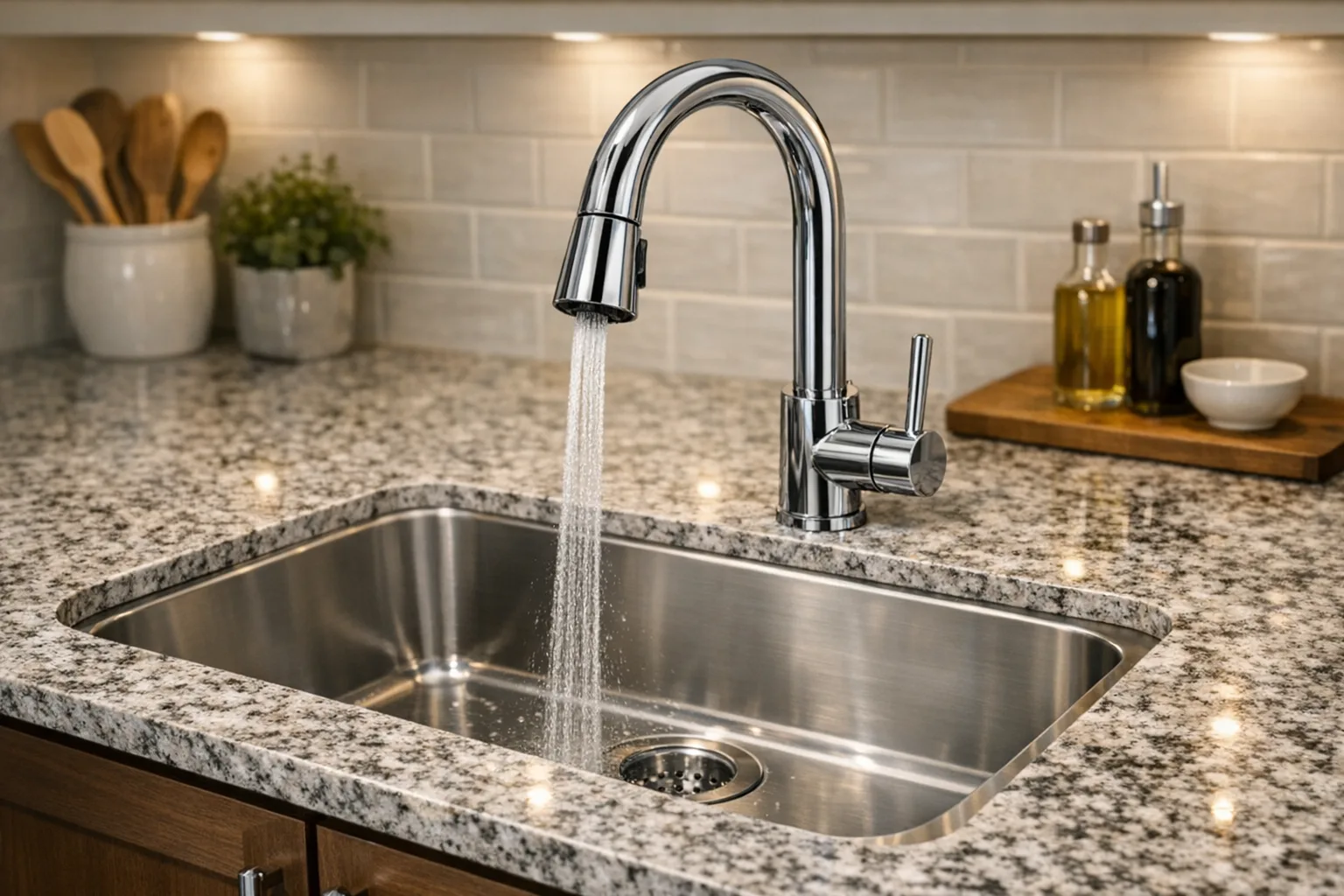
The $576 Question That Will Either Save You $800 or Cost You $1,200
Homewyse estimates the baseline cost to replace a kitchen sink at $576 to $696—but that number is practically fiction for most homeowners. The actual tab lands between $380 and $1,400 when you factor in the sink itself, labor, and the inevitable "while we're at it" upgrades that turn a simple swap into a full kitchen plumbing event. This Price-Quotes Research Lab data cuts through the optimistic estimates and delivers the numbers that actually matter when you hand over your credit card at the hardware store or to a licensed plumber.
The dirty secret of kitchen sink replacement is that nobody replaces just the sink. You're either upgrading the faucet because the old one is equally tired, or you're finally addressing that grinding garbage disposal that sounds like a dying engine. Occasionally, you're doing all three. That "$300 to $800" figure floating around the internet assumes you're dropping in the cheapest comparable replacement and bolting it back into place. Real homeowners with real kitchens know better.
2026 Kitchen Sink Replacement: The Complete Cost Breakdown
The cost to replace a kitchen sink in 2026 varies more wildly than most renovation guides admit. A basic stainless steel drop-in sink from a home center runs $100 to $300. A mid-range undermount stainless or granite composite adds $200 to $500. Premium materials—fireclay, cast iron with enamel coating, hand-hammered copper—can push material costs alone past $1,200. Then you pay someone to put it in.
Labor costs account for the bulk of the sticker shock. According to HomeGuide's 2026 data, professional sink installation labor runs $230 to $650 depending on geographic location, cabinet accessibility, and whether the installer encounters corroded plumbing or needs to modify cabinetry. Urban areas with higher contractor overhead consistently run 20% to 35% above national averages.
The lowest-cost scenario—replacing a like-for-like drop-in sink in a kitchen with straightforward plumbing—might cost as little as $380 total. The highest reasonable scenario for a full kitchen sink replacement with quality materials and professional installation approaches $1,400 to $1,800 when you add new faucet hardware, supply lines, and disposal removal.
Sink Material Costs: What You're Actually Paying For
Material choice drives the biggest variance in sink replacement costs. HomeGuide and Sliceit Right both break down sink costs by material type, and the ranges tell a clear story: stainless steel remains the budget workhorse, while specialty materials carry substantial premiums.
Stainless Steel Sinks ($100–$500): The dominant choice for good reason. These sinks resist heat, stains, and corrosion. Gauge thickness matters—16-gauge is notably better than 18-gauge and costs $50 to $150 more. Most stainless sinks fall into the drop-in or undermount categories with straightforward installation.
Composite Granite Sinks ($200–$800): Increasingly popular for their modern aesthetic and durability. These won't chip or scratch like cast iron, though they can crack if you drop heavy cast iron skillets. Installation requires precise cutouts, and many require special mounting hardware that adds $30 to $80 to the project.
Cast Iron with Enamel Coating ($300–$1,000+): The heavyweight champion of kitchen sinks. These retain heat exceptionally well (helpful for thawing frozen foods) and provide that classic farmhouse aesthetic. The enamel surface can chip if struck by hard objects, and at 50 to 100 pounds, they require reinforced cabinet support and careful handling during installation.
Fireclay Sinks ($400–$1,200): The premium farmhouse choice. Fireclay resists scratches, high temperatures, and acid damage. The tradeoff is fragility during installation and a price tag that reflects hand-crafted manufacturing. Expect extended lead times if ordering custom colors.
Copper Sinks ($500–$2,000): The statement piece of the sink world. Copper develops a natural patina over time that many homeowners find appealing. However, copper requires specific maintenance—avoiding abrasive cleaners—and is notably softer than stainless steel, making it more susceptible to dents from dropped cookware.
Garbage Disposal Replacement: The Hidden Kitchen Essential
Nobody wakes up excited about replacing their garbage disposal. It's one of those appliances that earns appreciation only through its absence—when it's grinding, leaking, or dead entirely. Yet garbage disposal replacement is one of the most common kitchen plumbing jobs, and the 2026 costs are remarkably consistent across sources.
A new garbage disposal unit costs $120 to $450 depending on horsepower and features. One-half horsepower units handle basic daily grinding for light usage. Three-quarter horsepower models provide stronger grinding suitable for families. One horsepower disposals tackle the toughest loads—corn cobs, chicken bones, fruit pits—but at $350 to $500, they're overkill for most households.
Labor for garbage disposal installation runs $120 to $400 according to One and Done Prep's detailed cost analysis, with the range reflecting whether the installer is simply swapping units or must repair electrical connections and modify drain plumbing. Removal of the old disposal typically costs $20 to $50 if not bundled with installation labor.
The total cost to replace a garbage disposal—unit plus professional installation—typically lands between $200 and $600. Budget models at $120 to $180 with professional installation bring the total to roughly $250 to $350. Mid-range 3/4 horsepower disposals with installation run $350 to $550. Premium 1 horsepower units with installation can reach $600 to $800.
When You're Replacing Both: The Full Kitchen Sink Assembly
The math compounds quickly when you're tackling the full sink-and-disposal replacement. Both appliances sit in the same workspace, share plumbing connections, and require similar labor access. Most plumbers price them together at a discount to separate installations. According to detailed cost guides from One and Done Prep and Design Transition Studio, replacing both a kitchen sink and garbage disposal with professional installation typically costs $400 to $900 depending on sink material and disposal horsepower.
Adding a new faucet to the project—which most homeowners do when the sink is already out—adds another $120 to $600 for the fixture plus $60 to $350 in installation labor. The complete sink-faucet-disposal replacement package therefore ranges from $600 to $1,800 for mid-range components, with budget-friendly options around $600 to $900 and premium installations approaching $2,000 to $2,500.
Here's the Price-Quotes Research Lab finding that most cost guides gloss over: the incremental cost of adding a garbage disposal to a sink replacement project is often just $150 to $300. The plumber is already there, the cabinet is already open, the plumbing is already accessible. Skipping the disposal replacement to save $300 today often means another $200 to $400 service call six to eighteen months later when the aging disposal fails.
Installation Variables That Blow Up Your Budget
Every sink replacement has hidden cost amplifiers lurking beneath the surface. Plumbers encounter these so frequently that experienced contractors build contingency time into their estimates—time that translates directly to your invoice.
Cabinet Modifications ($0–$400): Undermount sinks require the cabinet to be structurally sound and properly sized. If your existing cabinet has water damage, mold, or simply wasn't built for the weight of a cast iron sink, you're paying for repairs or reinforcement. Cutout modifications for different sink sizes or mounting styles can add $100 to $300 in carpentry work.
Plumbing Modifications ($50–$300): Drain configurations change between sink generations. Newer sinks often have different drain hole placements or diameters. If your existing plumbing doesn't align with the new sink's requirements, expect to pay for new P-traps, tailpieces, and supply lines. Corroded or damaged plumbing discovered during the replacement should be replaced immediately rather than patched—another $100 to $200 that turns into $500 if you wait for a second service call.
Electrical Work ($0–$250): Garbage disposals require electrical connections. If your kitchen's disposal circuit is on a shared breaker, missing a GFCI outlet, or uses outdated wiring, code compliance may require updates. This is rarely a problem in newer homes but appears in roughly 15% to 20% of kitchen replacements in houses built before 2000.
Countertop Considerations ($0–$500+): If you're replacing a drop-in sink with an undermount, or changing sink dimensions significantly, your existing countertop may require modification. Laminate countertops can be cut but are prone to damage. Solid surface and granite countertops require professional cutting with specialized tools. This scenario—uncommon but devastating to budgets—can add $300 to $2,000 depending on countertop material and the extent of work required.
DIY vs. Professional Installation: The Real Cost Comparison
Confident homeowners with basic plumbing skills can install a drop-in sink for the cost of materials alone: $100 to $500 depending on sink quality. The tools required—bucket, adjustable wrench, plumber's putty, teflon tape—cost $30 to $50 if not already owned. A DIY sink replacement might take two to four hours for someone without experience.
Garbage disposal replacement is more accessible than most people realize. The electrical connection is a simple plug-in for most units, and the plumbing connections use standard fittings. A handy homeowner with basic tools can complete the job in under an hour for units without electrical complications. The total cost for a DIY garbage disposal installation: $120 to $450 for the unit.
However, professional installation provides value beyond simple labor substitution. Licensed plumbers carry liability insurance that protects your home if something goes wrong. They identify potential problems— corroded pipes, inadequate venting, code violations—that DIYers miss. They complete the job correctly the first time, with warranties on their work. When the $650 plumber's bill prevents a $1,200 water damage claim because an amateur connection failed at 2 AM while you were sleeping, the professional premium is obvious.
For complex installations—undermount sinks, custom materials, electrical complications, significant plumbing modifications—the DIY path narrows considerably. The risk of damaging expensive countertops or creating hidden leaks that cause structural damage over months outweighs the $300 to $600 labor savings.
Geographic Variation: Where You Live Changes the Price
Sink replacement costs vary by region in ways that surprise homeowners who assume material costs are uniform. Labor rates differ by 40% to 60% between metropolitan and rural areas. Urban centers with high contractor demand—New York, San Francisco, Boston, Seattle—routinely charge 25% to 40% above national average labor rates. Rural areas with fewer licensed plumbers may see higher prices due to travel time surcharges rather than lower rates.
Material costs show less geographic variation than labor but aren't identical. Freight costs affect heavy items like cast iron and granite composite sinks, making them notably more expensive in Alaska and Hawaii. Specialty items may require shipping surcharges or extended delivery times in remote areas.
Permit requirements also vary. Most municipalities don't require permits for simple sink replacement without plumbing modifications. However, if your project involves moving the drain location, modifying supply lines, or upgrading electrical circuits, a permit and inspection may be required—adding $50 to $200 in fees and potentially requiring licensed contractor work for the electrical components.
Timing Your Project: When Contractors Give Better Prices
Seasonal demand affects sink replacement pricing more than most homeowners realize. Late winter and early spring—January through March in most climates—represent the slowest period for plumbing contractors. Emergency calls dry up after the winter freeze season ends, and new construction projects haven't yet ramped up. This is when you'll find the most receptive contractors and the best room for negotiation on pricing.
Late fall, particularly November, also shows softer demand before the winter emergency season picks up. However, contractor availability decreases as holidays approach, and some contractors increase prices to compensate for anticipated time off.
Summer months—June through August—represent peak demand for all home services. Scheduling during this period often means longer wait times, less flexibility on pricing, and potentially rushed work as contractors manage overloaded schedules. The price premium for summer scheduling typically runs 10% to 20% above off-season equivalent work.
The Price-Quotes Research Lab Bottom Line
Kitchen sink and garbage disposal replacement costs in 2026 break down into predictable categories with manageable variables. Budget $380 to $1,400 for a complete kitchen sink replacement with professional installation. Add $200 to $600 if you're including garbage disposal replacement in the same project. The complete sink-faucet-disposal replacement package lands between $600 and $1,800 for most homeowners choosing quality mid-range components.
The most common mistake homeowners make is treating sink replacement as an isolated expense. While you can theoretically replace just the sink, the reality of accessing the cabinet plumbing, disconnecting and reconnecting supply lines, and coordinating schedules means bundling related upgrades—faucet, disposal, supply lines—delivers better value per project than staggering separate service calls.
Choose materials that match your cooking habits and aesthetic preferences rather than chasing the lowest price point. A $300 stainless steel sink that lasts fifteen years provides better value than a $150 sink that requires replacement in five. Professional installation protects your home from water damage risks that far exceed the labor cost premium. And if you're doing this in January or February instead of July, you'll likely pay 10% to 15% less for the same quality work completed on your schedule rather than the contractor's.