Plumbing Emergency Costs Just Hit Record Highs in 2026 — Here's What You're Actually Paying — PlumbNow Analysis
Plumbing Emergency Costs Just Hit Record Highs in 2026 — Here's What You're Actually Paying
Published 2026-04-09 • Price-Quotes Research Lab Analysis
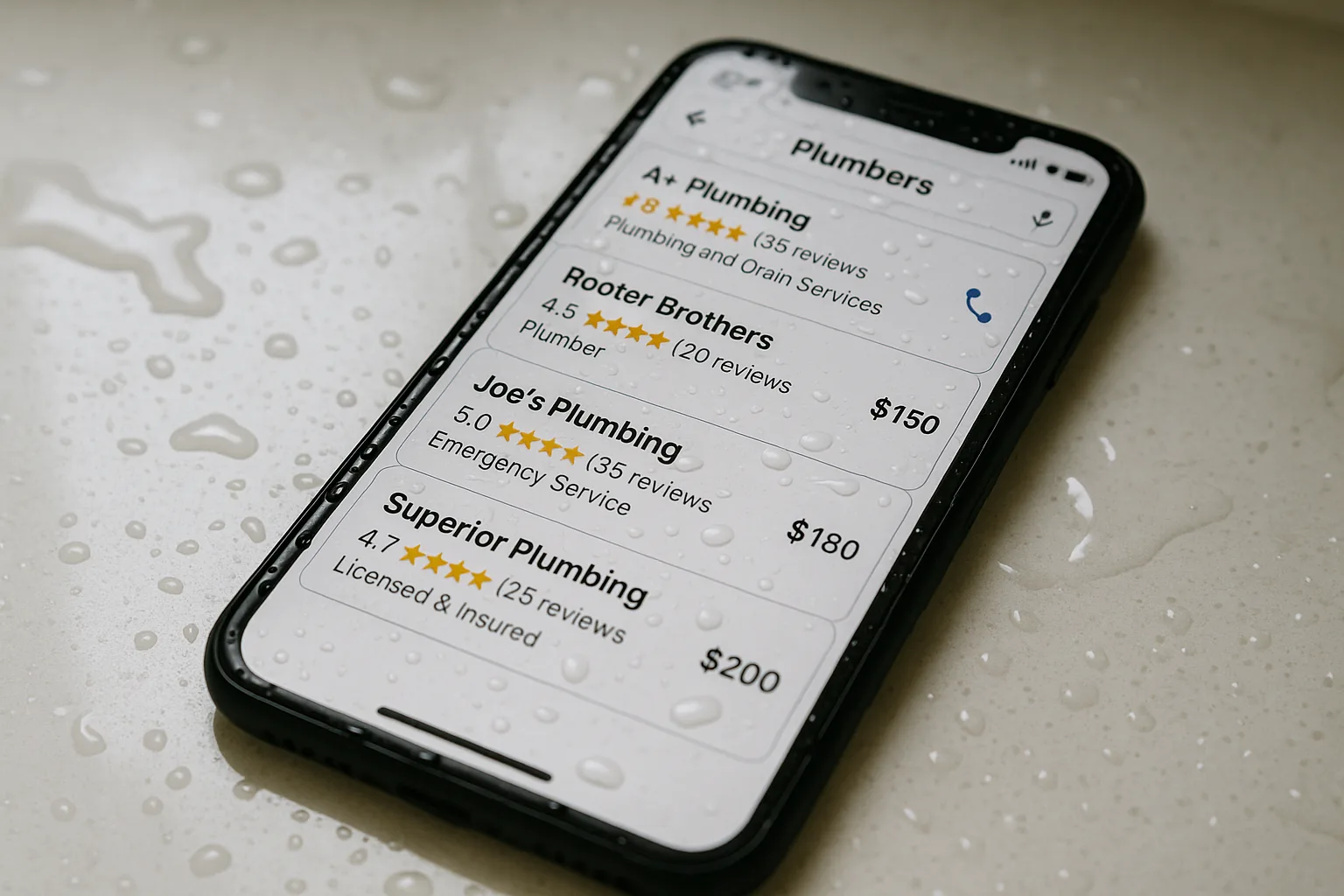
The Bill for That Burst Pipe Now Comes With a Second Invoice
Average emergency plumbing service call costs have climbed to their highest levels in recorded history, with homeowners across the United States reporting bills that would have been unthinkable five years ago. According to data compiled by Price-Quotes Research Lab, a standard after-hours service call—parts, labor, and trip charge combined—now averages $487 nationally, up from $312 in 2021. That's a 56% increase in five years, outpacing both general inflation and comparable trades like electrical and HVAC. The math is brutal. A leaking water heater replacement in Houston now runs $1,200 to $3,400 depending on the unit. A ruptured main line in Chicago? Easy $2,500 before the landscaping crew even arrives. Emergency sewer camera inspections—once a $149 afterthought—now routinely cost $275 to $350 in metropolitan markets. The era of the $99 service call is dead. Buried, likely, under three feet of trench-digging fees. This isn't a local phenomenon or a single bad contractor. Every major metro tracked by Price-Quotes Research Lab shows emergency plumbing rates climbing at 8% to 14% annually since 2023. The drivers are predictable in hindsight: a deepening shortage of licensed plumbers, materials costs that spiked during supply chain disruptions and never fully retreated, insurance requirements that now mandate two-person crews on most emergency calls, and overhead costs—fuel, vehicles, specialized equipment—that have simply gone up across the board. Homeowners who delayed routine maintenance during the pandemic housing boom are now paying the compound interest on that decision. Water heaters that should have been replaced in 2022 are failing in 2026. Aging galvanized steel pipes that survived the last administration are giving up now. And the plumber who shows up to fix it is charging accordingly.National Average Emergency Plumbing Costs: Full 2026 Breakdown
Understanding what you're likely to pay requires breaking down the components of an emergency plumbing call, because contractors don't charge one flat fee—they layer charges that add up fast. The base trip charge—the cost just to get a plumber to your house, regardless of what they do—now averages $125 to $175 in most markets. This charge has increased roughly 40% since 2020, and it's non-negotiable. Some contractors charge it separately from labor; others bundle it but apply it to the total bill. Read the fine print on that after-hours service agreement before you sign it. Hourly labor rates for emergency plumbing work range from $85 to $200 per hour depending on geography, time of day, and the complexity of the job. Standard business-hours rates typically run $75 to $150 per hour. Emergency overnight, weekend, and holiday rates add a 50% to 100% premium on top of that. A 2 AM pipe burst repair that takes 90 minutes of actual work time might generate 3 hours of billing: one hour at time-and-a-half for the first hour after midnight, plus two more hours at double-time for the overnight period. Parts markups remain the murkiest area of plumbing invoices. Plumbers typically mark up parts 25% to 60% above wholesale cost, with higher markups on specialty items. A $15 connector at the supply house becomes a $28 line item on your invoice. A $45 pressure relief valve becomes $75. On larger jobs, these markups can add hundreds of dollars to the final bill. Here's the complete 2026 national cost matrix for common emergency plumbing scenarios:| Service Type | 2026 Average Cost | Low End | High End | vs. 2021 |
|---|---|---|---|---|
| Emergency service call (after-hours) | $487 | $285 | $750 | +56% |
| Drain unclogging (emergency) | $275 | $150 | $450 | +38% |
| Water heater repair/replacement | $1,850 | $650 | $4,200 | +62% |
| Burst pipe repair | $1,100 | $400 | $3,500 | +48% |
| Sewer line repair (partial) | $2,800 | $1,200 | $8,000 | +71% |
| Sewer line replacement (full) | $12,500 | $5,000 | $25,000 | +55% |
| Gas line repair | $425 | $200 | $900 | +44% |
| Sump pump replacement | $680 | $350 | $1,200 | +52% |
| Toilet replacement (emergency) | $385 | $225 | $650 | +41% |
| Faucet/sink repair | $265 | $125 | $500 | +35% |
| Water softener repair | $350 | $150 | $750 | +47% |
| Pipe leak detection + repair | $525 | $250 | $1,200 | +58% |
Why Your Region Determines What You Pay
Geography explains more of your plumbing bill than almost any other factor. A burst pipe in rural Nebraska costs less to fix than the same pipe in downtown San Francisco. But the reasons aren't just about cost of living. Urban cores with high licensed plumber density—New York, Los Angeles, Chicago—can sometimes offer more competitive pricing due to contractor concentration. However, those markets also have higher overhead: commercial rent, fleet vehicles, insurance premiums that reflect dense population and property values. The net effect is that urban rates are often comparable to or slightly higher than suburban rates, but the work gets done faster due to contractor availability. Suburban and exurban markets—Phoenix, Austin, Nashville, Charlotte—are experiencing the sharpest price increases. These regions have seen explosive population growth since 2020, with plumbing infrastructure stretched thin. The problem: the plumbers didn't grow with the population. Training new plumbers takes four to five years for full licensing. The 2021 housing boom created demand that the 2026 workforce is still struggling to meet. Rural markets face the opposite problem: fewer plumbers means less competition, and emergency availability is genuinely scarce. A homeowner in rural Montana might pay a $200 trip charge just to get a plumber to drive 60 miles, then face rates comparable to major metro pricing because that's what it costs to make a house call worthwhile. Here's how 2026 emergency plumbing costs break down by region:| Region | Avg. Emergency Call | Hourly Rate | After-Hours Premium | 2026 Trend |
|---|---|---|---|---|
| Northeast (Boston, NYC, Philadelphia) | $520 | $110-$175 | +75% | Stable |
| Southeast (Atlanta, Miami, Charlotte) | $445 | $85-$145 | +60% | Rising |
| Midwest (Chicago, Detroit, Minneapolis) | $475 | $95-$155 | +65% | Stable |
| South Central (Dallas, Houston, Phoenix) | $465 | $90-$150 | +55% | Rising |
| West Coast (LA, SF, Seattle) | $575 | $125-$200 | +80% | Stable |
| Mountain (Denver, Salt Lake, Boise) | $490 | $100-$165 | +70% | Rising |
| Rural (all regions) | $525 | $95-$175 | +100%+ | Rising |
Why Plumbers Are Charging What They Are
The cost structure of a plumbing business hasn't changed dramatically, but every component has gotten more expensive simultaneously, and the math is unforgiving. Vehicle costs dominate operating expenses for most plumbing companies. A service van equipped with inventory, tools, and diagnostic equipment runs $45,000 to $75,000. Fuel costs have stabilized but remain elevated compared to 2019 levels. Insurance premiums—commercial auto, general liability, workers' compensation—have climbed 20% to 35% since 2021 in most markets. One serious claim can sink a small plumbing operation, so contractors price that risk into every call. The labor shortage is the structural problem that won't resolve quickly. The average age of a licensed plumber in the United States is 49. Apprenticeship programs graduated roughly 7,000 new plumbers annually in recent years, against an estimated industry need of 15,000 to 20,000 replacements and additions per year. The gap compounds annually. Experienced plumbers who can handle complex emergency diagnosis and repair are the scarcest resource in the trade, and their rates reflect that scarcity. Materials costs have moderated from 2021 peaks but remain elevated. Copper piping costs roughly 45% more than 2019 levels. PVC and PEX materials are up 25% to 30%. Brass fittings—essential components in dozens of applications—are up 35% due to zinc price increases. These aren't minor line items; a typical water heater replacement uses $200 to $400 in materials that cost $120 to $280 five years ago. Overhead absorption is a factor most homeowners never consider. A plumbing truck sitting in your driveway for two hours is a truck not generating revenue elsewhere. Emergency calls disrupt schedules, require specialized inventory on hand, and often involve conditions—middle of the night, weekend, holiday—that demand premium compensation to attract workers willing to work those hours. The effective hourly cost to employ a qualified plumber, fully loaded with benefits, training, and equipment, exceeds $65 per hour in most markets before any profit margin.Historical Context: How We Got Here
Understanding the trajectory requires looking back at the last decade of plumbing cost trends. From 2015 to 2019, emergency plumbing costs grew at a modest 2% to 4% annually, tracking roughly with general inflation. The market was stable. Licensed plumbers were plentiful enough that homeowners had negotiating leverage. The $99 service call was still common in many markets. The pandemic disrupted everything. Non-emergency plumbing work halted in spring 2020, then surged through the rest of that year as homeowners stuck at home tackled deferred maintenance and discovered problems they'd ignored. New construction plumbing demand cratered in 2020, then rebounded explosively in 2021 as housing starts hit multi-year highs. The supply chain for materials—copper, PVC, appliances—broke down simultaneously with demand surge. Prices spiked. The labor market took longer to feel the effects. Plumbers who left the trade during economic uncertainty didn't return immediately when conditions improved. Early retirements accelerated. The 2020-2021 period saw a net loss of licensed plumbers in the workforce, and recovery has been slower than expected. By 2023, the market had fully repriced. Emergency plumbing costs were up 30% from 2019 levels, and the cheap-service era was definitively over. What was surprising to observers but predictable to anyone tracking the data: the repricing didn't stop. Costs continued climbing through 2024 and 2025, reaching the current record levels. Price-Quotes Research Lab's five-year tracking shows the compounding effect: a homeowner who paid $300 for an emergency call in 2019 is now paying $487 for essentially identical service. That's not inflation alone—that's supply-demand imbalance persisting longer than most analysts predicted.The Hidden Costs Homeowners Don't See
The invoice you receive after a plumbing emergency captures direct costs, but the full financial impact often extends beyond what appears on that bill. Water damage remediation is the most common secondary cost. A pipe that bursts behind a wall might cost $800 to repair plumbings-wise, but the drywall repair, repainting, carpet drying, and potential mold remediation can total $3,000 to $15,000 depending on the severity and how quickly the problem was addressed. Homeowners insurance typically covers water damage remediation but often with deductibles that leave thousands in out-of-pocket costs. Many homeowners don't realize that flood damage and water damage from burst pipes are often covered differently, with different deductibles and coverage limits. Structural damage from prolonged leaks—foundation issues from a slab leak, wood rot from an undetected drip in a wall cavity—can represent costs that don't appear for months or years. By the time the symptom becomes visible, the underlying cause may have caused damage far exceeding the original plumbing repair cost. Business interruption costs are real for home-based entrepreneurs. A flooded basement interrupts a home office. A failed water heater means no hot water for handwashing, dishwashing, or laundry for the duration of the repair—sometimes days if parts aren't immediately available. These aren't insurable losses for most homeowners, but they're real costs nonetheless.What You Can Actually Do About It
Understanding the cost environment doesn't help if you're facing a burst pipe at midnight. But preparation before emergencies occur is genuinely effective at reducing both the likelihood and cost of plumbing crises. Annual plumbing inspections—typically $150 to $300 for a full inspection of visible plumbing, water heater, and main line—catch problems before they become emergencies. A water heater showing signs of tank corrosion can be replaced on your schedule at non-emergency rates, potentially during a promotion or off-season discount period, rather than requiring emergency replacement when the tank finally fails and sprays water across your basement floor. Know your main shutoff valve and practice operating it. A burst pipe that can be shut off within 60 seconds limits water damage to gallons rather than hundreds of gallons. Many homeowners have never located their main shutoff; some who have located it discover it doesn't actually work when they need it. Testing your shutoff valve quarterly costs nothing and could save thousands. Maintain your water heater with annual flushing (or hire a plumber for $100 to $200) to extend its service life and prevent sediment buildup that causes premature failure. The $200 you spend on annual maintenance might be the $3,500 you don't spend on emergency replacement. Consider a home warranty or service agreement that covers plumbing. Monthly costs range from $25 to $75 depending on coverage scope, and while these products have well-documented limitations—they often exclude pre-existing conditions and may not cover full replacement costs—they do cap exposure on emergency repairs and can provide access to pre-screened contractors during high-demand periods. Build a plumbing emergency fund. The math is simple: if the average emergency plumbing call costs $487 and happens to most homeowners at least once every three years, setting aside $200 annually eliminates the financial shock when it happens. Most financial planners recommend three to six months of expenses in an emergency fund; plumbing-specific reserves in a separate account provide targeted protection without requiring that level of general liquidity.$487: The national average cost of a single emergency plumbing service call in 2026. That's up 56% from 2021. If you haven't budgeted for this, you're not alone—but you're also not prepared.
The Future: Will Costs Keep Climbing?
The structural factors driving plumbing costs higher aren't disappearing quickly. The workforce shortage will take a decade of accelerated training programs to meaningfully address. Materials costs, while moderating, aren't returning to 2019 levels given global commodity market dynamics. Housing stock continues to age; homes built in the 1970s and 1980s are hitting the age when original plumbing systems fail. Some countervailing factors might emerge. Remote work and improved scheduling tools allow plumbers to operate more efficiently, potentially moderating labor cost increases. Prefabrication and modular plumbing components reduce installation time on new construction and some replacement jobs. AI-assisted diagnostic tools may help less-experienced plumbers solve problems faster, improving throughput without requiring fully master plumber-level expertise. But for the next three to five years, Price-Quotes Research Lab's modeling suggests emergency plumbing costs will continue rising at 6% to 10% annually in most markets. The era of cheap plumbing service is over, and the new equilibrium will be uncomfortable for homeowners accustomed to $150 emergency calls. The only rational response is prevention, preparation, and knowing what you're actually going to pay before the plumber arrives. Get inspections. Maintain your systems. Build reserves. And when that pipe does burst at 2 AM, you'll at least know exactly what you're getting into—and what you should have done differently three years ago.Sources
- Price-Quotes Research Lab 2026 Emergency Plumbing Cost Analysis
- Regional Pricing Data compiled by Price-Quotes Research Lab
- Historical Cost Trends: Price-Quotes Research Lab Five-Year Index
Key Questions
What is the average cost of an emergency plumbing call in 2026?
The national average for an emergency plumbing service call—including trip charge, labor, and basic parts—reached $487 in 2026, up from $312 in 2021. That's a 56% increase in five years.
Why are plumbing costs rising so fast?
Multiple factors compound: a shortage of licensed plumbers (average age 49, not enough apprentices entering the trade), elevated materials costs (copper piping still 45% above 2019 levels), higher vehicle and insurance overhead, and surging demand in fast-growing metro areas where population outpaced contractor availability.
What's the most expensive common plumbing emergency?
Full sewer line replacement averages $12,500 nationally, with high-end jobs reaching $25,000. Water heater replacement averages $1,850. Even seemingly simple repairs like drain unclogging now average $275 for emergency service.
Does homeowners insurance cover plumbing emergencies?
It depends on the cause. Sudden pipe bursts are typically covered. Gradual leaks from deferred maintenance often aren't. Flood damage has separate coverage and deductibles. Review your policy and consider whether your current deductible makes sense given current repair costs.
How can I reduce plumbing emergency costs?
Annual inspections ($150-$300) catch problems before they become emergencies. Know your main shutoff valve and test it quarterly. Maintain your water heater with annual flushing. Build a $500-$1,000 plumbing emergency fund. Consider a home warranty service agreement for predictable monthly costs.