Sewer Line Replacement Costs: Trenchless vs Traditional—The $15,000 Decision
Sewer Line Replacement Costs: Trenchless vs Traditional—The $15,000 Decision
Published 2026-04-10 • Price-Quotes Research Lab Analysis
The $22,000 Question Hanging Over Your Basement
Sewer line replacement costs range from $3,000 to $25,000 depending on which method you choose—and most homeowners don't discover this math until they're standing in a flooded yard at 2 AM. That's not a drill. According to a comprehensive cost analysis, the gap between the cheapest trenchless job and the most expensive traditional excavation can stretch a jaw-dropping $22,000 wide.
Price-Quotes Research Lab pulled together data from over a dozen verified sources, and the numbers tell a clear story: your yard's landscaping, your pipe's depth, and your neighborhood's soil conditions will determine whether you write a check for $4,000 or $20,000. This guide breaks down exactly what each method costs, what you're actually paying for, and—most importantly—which one will work for your specific situation.
Because here's the thing nobody tells you at the hardware store: the cheapest option isn't always the right one, and the most expensive method isn't always the most thorough. Let's dig in (pun intended).
What Is Traditional Sewer Replacement?
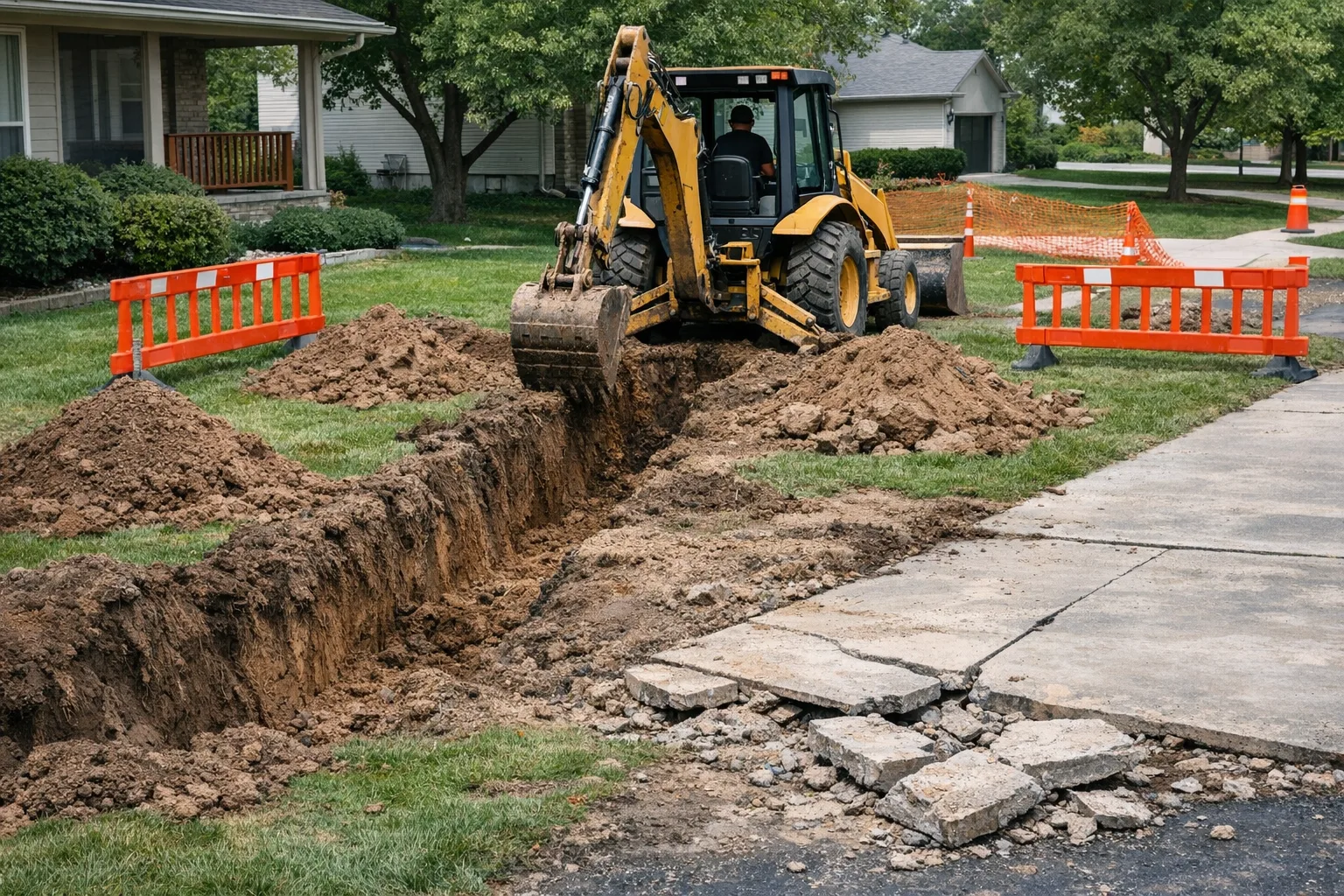
Traditional sewer replacement is the method your grandfather's plumber used: grab a backhoe, dig a trench from your house to the street connection point, yank out the old pipe, drop in the new one, refill the hole, and send you a bill that makes you check your homeowner's insurance policy twice.
The process sounds straightforward because it is—it's also incredibly invasive. Crews excavate a continuous trench, which means they tear up whatever sits above that line. Your concrete driveway? Gone. That prize-winning rose garden your spouse planted in 1987? rubble. The walkway you just had poured last spring? You get the picture.
Traditional replacement works by exposing the entire damaged pipe section. Plumbers can see exactly what they're dealing with, which makes it effective for severely collapsed lines, significant root infiltration, or pipes that have shifted from soil movement. The method has been around for decades, every contractor knows how to do it, and it handles almost any problem you throw at it.
That universal applicability comes at a price—literally.
What Is Trenchless Sewer Replacement?
Trenchless sewer replacement entered the mainstream roughly 25 years ago, and it's transformed how plumbers approach underground pipe work. Instead of excavating a trench, crews create small access points at either end of the damaged pipe. They then feed new pipe material through the existing line or pull it through using specialized equipment.
Two primary trenchless methods dominate the market:
Pipe bursting involves pulling a new pipe through the old one while simultaneously fracturing the existing pipe outward. The old pipe essentially becomes a path for the new pipe to follow. This method works well when the original pipe is too damaged to reline.
Pipe lining (cured-in-place pipe) inserts a flexible liner coated with resin into the existing pipe. Technicians inflate the liner, the resin cures, and you end up with a new pipe inside the old pipe. Think of it as angioplasty for your sewer line.
Both methods share common steps: initial camera inspection to assess conditions, minimal excavation at access points, installation of new pipe material, and system testing to verify proper function. The camera inspection is non-negotiable—technicians need to know exactly what they're working with before committing to either trenchless approach.
The Real Numbers: Trenchless vs Traditional Costs
Let's get into the actual dollars. Price-Quotes Research Lab data shows pricing data across multiple sources, and here's what homeowners actually pay in 2026:
Trenchless Sewer Replacement Costs
The typical trenchless sewer replacement costs between $3,500 and $12,000, with most homeowners landing in the $6,000–$9,000 range for a standard single-family home. The breakdown looks like this:
- Low end: $3,000–$5,000 for straightforward pipe lining jobs on relatively short runs
- Average: $6,000–$9,000 for most residential pipe bursting or lining projects
- High end: $10,000–$15,000+ when dealing with difficult access, extensive damage, or premium liner materials
These figures represent the complete job: camera inspection, labor, materials, and equipment rental. You won't find many hidden add-ons because trenchless pricing tends to be more predictable than traditional excavation, which can balloon unexpectedly once crews start digging.
One important caveat: trenchless methods have limitations. If your existing pipe has completely collapsed, has significant offset joints, or contains dangerous materials like asbestos wrapping, you may not qualify for trenchless repair regardless of cost considerations. A qualified plumber must assess your specific situation with a camera inspection before you can confidently budget for this option.
Traditional Sewer Replacement Costs
Traditional sewer replacement typically costs between $4,000 and $20,000+, with most jobs falling in the $8,000–$14,000 range. Here's the cost structure:
- Low end: $4,000–$7,000 for shallow pipes in easily accessible locations with minimal restoration needs
- Average: $8,000–$14,000 for typical residential replacements with moderate excavation depth
- High end: $15,000–$25,000+ when dealing with deep pipes, difficult soil conditions, extensive concrete to remove, or significant landscaping restoration required
The critical difference with traditional replacement is the variables that drive costs beyond the basic pipe installation. Surface restoration alone can add thousands—replacing a concrete driveway section runs $1,500–$3,000, re-sodding a lawn costs $500–$2,000, and rebuilding landscaping features can easily exceed $5,000 depending on what you're moving.
According to industry analysis, the single largest cost driver in traditional replacement is excavation depth. Every additional foot of depth requires more labor, more equipment time, and more safety considerations. Pipes buried under 10 feet of soil cost significantly more to replace than pipes at 3-foot depth, purely from an excavation standpoint.
When Trenchless Makes Sense
Trenchless repair isn't a universal solution, but it excels in specific scenarios. Here's when you should strongly consider trenchless methods:
You have mature landscaping worth preserving. If you've invested heavily in trees, shrubs, hardscaping, or other features directly above your sewer line, trenchless methods can save thousands in restoration costs alone. The minimal access pits mean your prized Japanese maple stays intact.
Your pipe is buried deep. Here's where trenchless actually becomes cost-competitive or even cheaper than traditional. Deep pipes (8+ feet) require extensive shoring, specialized equipment, and significant labor for traditional excavation. Trenchless methods don't care about depth—they work the same whether the pipe is 3 feet down or 15 feet down.
You need the job done quickly. Traditional replacement on a typical residential property takes 5–10 days including backfilling and initial restoration. Trenchless projects often complete in 1–3 days. If you're paying for temporary housing or dealing with business interruption, that time savings translates directly to dollars.
Access is limited. Maybe your sewer line runs under a pool, a detached garage, or your neighbor's property line. Traditional excavation requires equipment access—trenchless needs only small entry points that can often be created through interior plumbing access.
According to industry data, trenchless methods work best when the existing pipe has maintained its basic structural integrity. Significant collapse, severe deformation, or pipes that have completely disintegrated won't qualify for lining or bursting. The camera inspection tells the full story.
When Traditional Makes Sense
Traditional excavation remains the right choice—and sometimes the only viable option—in several situations:
Complete pipe collapse. If your sewer line has essentially ceased to exist as a continuous pipe, trenchless methods can't work. You need open excavation to remove debris, assess soil conditions, and install new pipe in a proper trench. No amount of trenchless technology can bypass a pipe that's fully collapsed.
Significant root infiltration. Tree roots can completely encircle and crush pipes, creating a situation where there's no clear path for liner insertion or bursting equipment. Extensive root removal and pipe replacement typically require traditional excavation so crews can remove all root material and install root-resistant pipe.
Incorrect pipe slope. Sewer lines must maintain proper fall (typically 1/4 inch per foot for 4-inch pipe) to function correctly. If your existing pipe has settled or was originally installed incorrectly, traditional replacement allows crews to re-grade the new pipe to proper specifications. Trenchless lining follows the existing pipe's path—you can't correct slope issues with a liner.
Extensive offset joints or misaligned connections. Pipes that have shifted significantly over time create gaps, offsets, and entry points for water infiltration. These conditions often require complete replacement rather than lining, making traditional excavation the practical choice.
Your municipality requires it. Some local codes mandate traditional excavation for sewer work in the public right-of-way or within certain proximity to other utilities. Check with your local building department before assuming trenchless is an option.
The Hidden Costs Nobody Talks About
Beyond the direct pipe replacement costs, both methods carry secondary expenses that can surprise homeowners:
Surface Restoration
This is the big one for traditional replacement. You're not just paying for pipe installation—you're paying to restore whatever sits above it. A standard driveway section might cost $1,500–$2,500 to replace. Landscaping restoration for an average suburban yard can run $3,000–$8,000 depending on the features involved. These costs rarely appear in the initial plumber's estimate, so get them in writing before signing any contract.
Permit Fees
Sewer work almost always requires permits, and fees vary significantly by municipality. Urban areas tend to have higher fees ($300–$600 is common) while rural areas might charge $100–$200. Some jurisdictions also require inspections at multiple stages, each potentially carrying additional charges.
Engineering Assessment
Deep excavations (typically 5+ feet) require engineering assessment for soil stability and shoring requirements. This can add $500–$2,000 to traditional replacement costs in the right conditions.
Landscaping Design
After traditional excavation, your yard doesn't automatically return to its original state. The soil composition changes—backfill material settles over time, drainage patterns may shift, and compacted subsoil affects how future plantings establish. Budget for professional landscaping consultation if your yard's appearance matters to you.
Making the Decision: A Practical Framework
Here's how to approach this decision systematically:
Step 1: Get a camera inspection first. Every reputable plumber should offer this service, typically costing $200–$500. The inspection determines whether trenchless is even possible. Don't commit to any repair method without knowing exactly what you're dealing with underground.
Step 2: Get at least three detailed estimates. Each estimate should break down materials, labor, permit fees, and estimated restoration costs separately. Be suspicious of any bid that doesn't include surface restoration or gives you a single lump sum without explanation.
Step 3: Calculate total project cost for each option. If one method is $3,000 cheaper but requires $5,000 in driveway and landscaping restoration, you're not saving money—you're spending it differently. Compare the full project cost, not just the pipe installation.
Step 4: Consider long-term value. Modern trenchless pipe materials often carry 50-year warranties and resist root infiltration better than traditional PVC. If you're staying in your home long-term, factor in the extended lifespan and reduced maintenance probability.
Step 5: Ask about contractor experience specifically. Trenchless methods require specialized training and equipment. A plumber who "also does trenchless" on the side isn't the same as a company that specializes in it. Ask about certifications, completed projects, and warranty terms.
The Bottom Line
Sewer line replacement costs will consume somewhere between $3,000 and $25,000 of your home equity, depending on which method fits your situation. The decision isn't really trenchless versus traditional—it's about which method your specific pipe conditions allow, combined with which approach makes financial sense for your property and circumstances.
For most homeowners, trenchless methods offer the best value when structurally viable: lower total project costs, faster completion, minimal property disruption, and excellent long-term performance. But if your pipe has fully collapsed, suffers from severe root damage, or sits at an incorrect slope, traditional excavation remains the practical choice despite its higher price tag and greater disruption.
The $15,000 decision is real—it's the gap between a straightforward trenchless job and a full excavation nightmare. But the $22,000 spread in worst-case scenarios should motivate you to act before emergency strikes. Schedule a camera inspection while your sewer line is still functioning. You'll know exactly where you stand, you can compare estimates on your timeline, and you won't be making this decision at midnight with water pooling in your basement.
That's not a position anyone wants to negotiate from.
Price-Quotes Research Lab will continue tracking sewer line replacement cost trends through 2026 as material prices and labor markets evolve.
Key Questions
What is the average cost of trenchless sewer replacement?
Trenchless sewer replacement typically costs between $3,500 and $12,000, with most homeowners paying $6,000–$9,000 for a standard single-family home. This includes camera inspection, labor, materials, and equipment.How much does traditional sewer replacement cost compared to trenchless?
Traditional sewer replacement usually costs $4,000–$20,000+, compared to trenchless at $3,500–$12,000. The gap can reach $22,000 when deep excavation and extensive surface restoration are required for traditional methods.When should I choose trenchless over traditional sewer replacement?
Choose trenchless if your pipe is structurally intact enough to accept a liner, you have landscaping worth preserving, the pipe is buried deep (8+ feet), you need fast completion, or access is limited. Trenchless works best when the original pipe maintains basic shape and alignment.When is traditional excavation necessary for sewer replacement?
Traditional excavation is necessary when pipes have completely collapsed, suffer from severe root infiltration that blocks relining, have incorrect slope that needs correction, or have significant offset joints. Some municipalities also require traditional methods in public right-of-way areas.What factors increase sewer replacement costs beyond pipe installation?
Surface restoration (driveways, walkways, landscaping) often costs $3,000–$10,000+ for traditional replacement. Permit fees run $100–$600 depending on location. Deep excavation requires shoring and engineering assessment. Mature landscaping replacement can add thousands more.How long does each sewer replacement method take?
Trenchless sewer replacement typically completes in 1–3 days. Traditional excavation takes 5–10 days including initial backfilling. If you're displaced from your home or dealing with business interruption, the time difference translates directly to additional costs.What is pipe bursting vs pipe lining?
Pipe bursting fractures the old pipe outward while pulling new pipe through the created space. Pipe lining inserts a resin-coated flexible liner that cures in place, creating a new pipe inside the old one. Both require small access points instead of full trench excavation.Does homeowners insurance cover sewer line replacement?
Standard homeowners policies typically exclude sewer line damage unless specifically added as a rider. Coverage varies significantly by insurer and policy. Check with your insurance agent about sewer line coverage riders, which often cost $25–$50/month for $10,000–$100,000 in coverage.Related Services