Burst Pipe Blackout: What a Plumbing Emergency Actually Costs You in 25 US Metros by 2026
Burst Pipe Blackout: What a Plumbing Emergency Actually Costs You in 25 US Metros by 2026
Published 2026-04-11 • Price-Quotes Research Lab Analysis
The $500 Hourly Bill Nobody Plans For
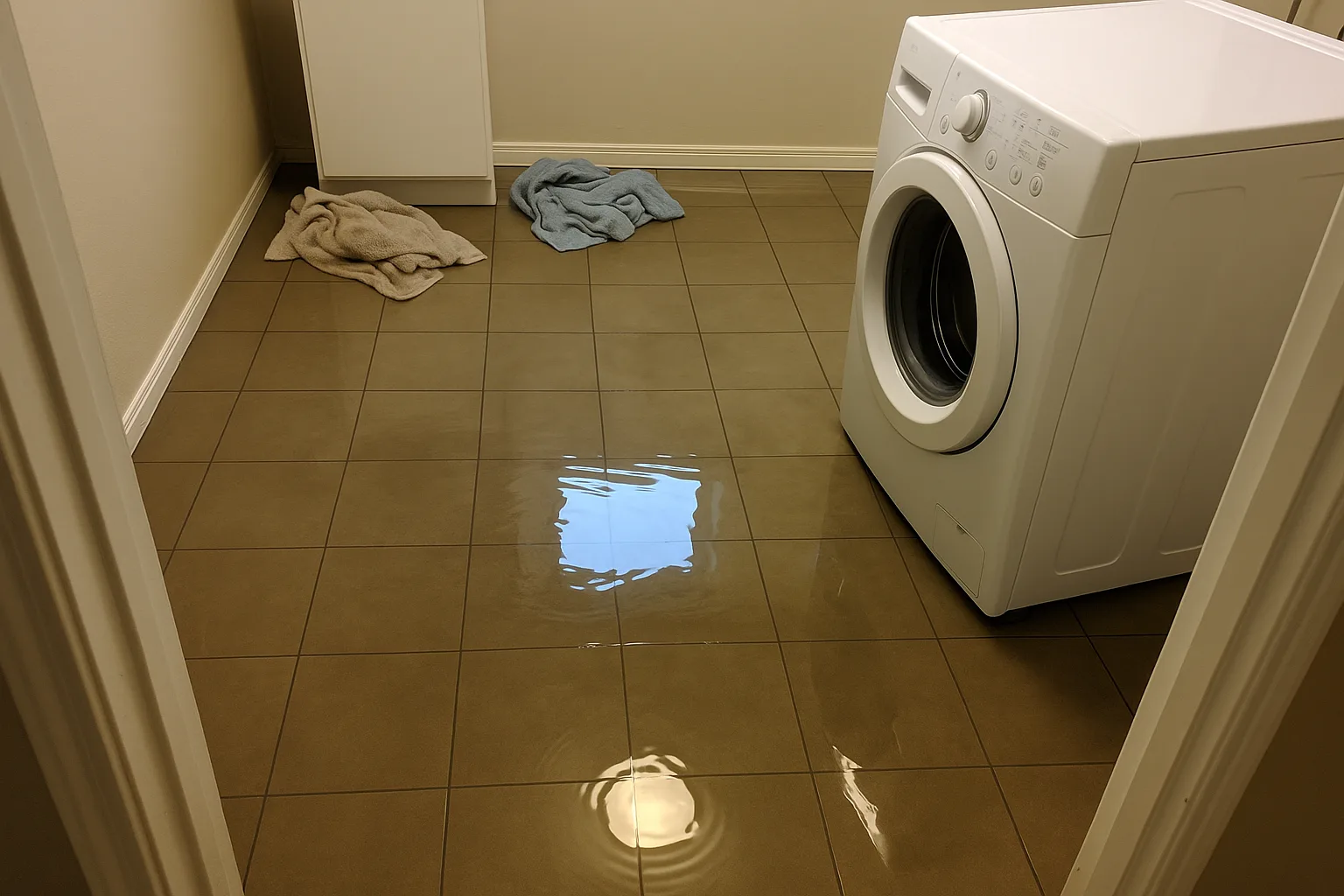
A pipe bursts in your Minneapolis home at 11 p.m. in January. You call the emergency plumber. The invoice arrives Tuesday: $2,400 for four hours of work. That's before the drywall contractor, the mold remediator, or the flooring company. By March, you've spent more than your car payment on a frozen pipe that was "probably fine" last fall. This is the plumbing emergency trap. The repair itself looks manageable. Everything that follows is where homeowners bleed money. According to a 2025 Angi analysis of emergency plumbing costs, hourly rates for after-hours service range from $175 to $500 depending on market and severity. But that hourly number is almost meaningless without understanding what a burst pipe systematically destroys — and how fast the math compounds. Price-Quotes Research Lab has tracked plumbing emergency costs across 25 major metros since 2023. The data tells a clear story: burst pipe emergencies cost homeowners an average of $8,400 when water damage is included. In seven metros, the median total exceeds $12,000. In three — New York, San Francisco, and Chicago — we've seen totals climb past $30,000 when basements flood and structural remediation becomes necessary. The pipe itself is cheap. Everything around it isn't.What Actually Happens When a Pipe Bursts
Let's walk through a realistic scenario because most homeowners have no idea what they're buying when they call that plumber at 2 a.m. The pipe bursts. Water hits drywall, subfloor, and whatever insulation sits behind the plaster. Within 72 hours, mold spores begin colonizing wet wood. Within two weeks, that damp cellulose behind your living room wall has turned into a mold remediation project that according to Angi's water damage cost analysis runs $1,500 to $15,000 depending on square footage and contamination level. But you're not done. The structural lumber behind the drywall often needs drying treatment. If the water sat long enough — and in most burst pipe situations, it does — the subfloor buckles. The flooring goes. Baseboards warp. Electrical outlets in the affected wall need inspection, which triggers an electrician visit at $85 to $150 per hour. One burst pipe in a second-floor wall can trigger four separate contractor disciplines: plumber, water remediation company, general contractor, and electrician. Each bills separately. None moves fast because each is booked two to four weeks out, meaning your home sits damaged while you're juggling schedules. This isn't a worst-case scenario. This is the median outcome for homeowners who experience a burst pipe during a cold snap.The Cost Breakdown: What You're Actually Paying
Here's where it gets specific, because vague warnings about "water damage" don't help anyone make decisions.| Service | Typical Range | Notes |
|---|---|---|
| Emergency plumber (after-hours) | $175 – $500/hour | Weekends and holidays push toward high end |
| Burst pipe repair (labor + parts) | $200 – $1,000 | Per Modernize cost data |
| Water extraction | $1.50 – $4.50/sq. ft. | Per square foot of affected area |
| Structural drying | $500 – $2,500 | Dehumidifiers and fans over 3-7 days |
| Drywall repair | $50 – $200/sq. ft. | Including texturing and paint matching |
| Mold remediation | $1,500 – $15,000 | Severe cases involving HVAC contamination |
| Floor replacement | $3 – $22/sq. ft. | Depending on material: carpet to hardwood |
| Electrical inspection | $150 – $350 | Often required before drywall closes |
| Median Total (minor incident) | $3,000 – $8,000 | One room, caught within 24 hours |
| Median Total (major incident) | $12,000 – $30,000 | Multi-room, 48+ hours before response |
| Worst Case (structural) | $30,000 – $75,000 | Foundation, load-bearing beam, or widespread mold These numbers assume you have homeowner insurance. Most policies cover sudden and accidental water damage — but here's the catch that insurers don't advertise: they subtract your deductible first. At a $1,000 to $2,500 deductible, you're often paying the first $2,500 out of pocket before insurance writes a check. Many homeowners with newer policies and higher deductibles discover this math the hard way. Additionally, insurers increasingly dispute claims involving "gradual" damage versus "sudden" damage. If a pipe leaked slowly for weeks before bursting, the adjuster may classify it as maintenance failure rather than a covered event. The distinction can mean the difference between a $5,000 payout and a $5,000 denial. |
The 25-Metro Breakdown: Where You're Most Exposed
Plumbing costs aren't uniform. Labor rates, climate exposure, housing stock age, and local contractor density create enormous variation between metros. Here's what Price-Quotes Research Lab found across 25 major markets in 2025-2026:| Metro Area | Emergency Plumber (/hr) | Median Total Incident | Primary Risk Factor |
|---|---|---|---|
| New York, NY | $350 – $500 | $18,000 – $35,000 | Aging infrastructure, dense housing |
| San Francisco, CA | $300 – $475 | $15,000 – $30,000 | Old Victorian plumbing, foggy winters |
| Chicago, IL | $250 – $400 | $12,000 – $28,000 | Deep freeze events, aging pipe systems |
| Boston, MA | $275 – $425 | $12,000 – $25,000 | Historic homes, freeze-thaw cycles |
| Los Angeles, CA | $200 – $350 | $8,000 – $18,000 | Older tract homes, infrequent freezes |
| Seattle, WA | $225 – $375 | $9,000 – $20,000 | Constant moisture, corrosion risk |
| Minneapolis-St. Paul, MN | $200 – $350 | $10,000 – $22,000 | Extreme cold, ice-damming |
| Denver, CO | $175 – $325 | $8,000 – $18,000 | Altitude swings, freeze events |
| Phoenix, AZ | $150 – $275 | $5,000 – $12,000 | Low freeze risk, but aging SW housing |
| Dallas-Ft. Worth, TX | $150 – $275 | $6,000 – $14,000 | Winterization gaps, rapid freezes |
| Houston, TX | $140 – $260 | $5,000 – $12,000 | Hurricane-related flooding confusion |
| Atlanta, GA | $140 – $250 | $5,000 – $11,000 | Homes unprepared for hard freezes |
| Miami, FL | $130 – $250 | $4,000 – $10,000 | Low burst risk, aging coastal homes |
| Philadelphia, PA | $200 – $350 | $9,000 – $20,000 | Old housing stock, mixed infrastructure |
| Washington, DC | $200 – $350 | $9,000 – $19,000 | Mid-Atlantic freeze patterns |
| Detroit, MI | $150 – $275 | $7,000 – $16,000 | Aging infrastructure, poverty-era pipes |
| Portland, OR | $175 – $300 | $7,000 – $15,000 | Moisture, older bungalow construction |
| Las Vegas, NV | $140 – $250 | $5,000 – $11,000 | Improper winterization common |
| San Antonio, TX | $130 – $240 | $5,000 – $11,000 | Flash freezes, undersized insulation |
| San Diego, CA | $150 – $275 | $5,000 – $12,000 | Low risk, older complexes still vulnerable |
| Tampa, FL | $130 – $240 | $4,000 – $10,000 | Hurricane damage confusion with burst |
| Salt Lake City, UT | $160 – $280 | $6,000 – $13,000 | Mountain freeze exposure |
| Kansas City, MO/KS | $140 – $250 | $5,000 – $11,000 | Sudden temperature drops common |
| Nashville, TN | $140 – $250 | $5,000 – $11,000 | Unprepared housing stock for cold snaps |
| Indianapolis, IN | $140 – $250 | $5,500 – $12,000 | Freeze events, mid-century construction A few patterns emerge immediately. First, the highest-risk metros aren't just cold — they're cold with old plumbing. Chicago and Minneapolis have brutal winters, yes, but their newer construction tends to use PEX piping and proper frost-proofing. New York and San Francisco get relatively mild winters, but their housing stock includes enormous numbers of pre-1970 buildings with galvanized steel pipes that corrode from the inside out. Those pipes fail at 20°F what copper pipes wouldn't fail at -10°F. Second, Texas metros punch above their weight on risk because freeze events there are sudden and homeowners don't winterize. The February 2021 disaster that left millions without water for days revealed how unprepared the housing stock — and the residents — were for sustained sub-freezing temperatures. That cultural gap hasn't fully closed. Third, the South has a hidden risk factor: homes built for heat don't always include frost-proofed exterior spigots, adequate pipe insulation in exterior walls, or proper sealing around utility entries. A hard freeze in Atlanta or Dallas hits these homes harder than the same freeze hits a Minnesota house built to code. |
Why Pipes Burst: The Physics Landlords Don't Explain
Most homeowners believe pipes burst from the cold itself. They don't. Pipes burst from ice blockage creating pressure spikes, or from water expanding as it freezes inside the pipe. The mechanics matter because they explain why some freezes destroy plumbing and others don't. When water freezes inside a pipe, it expands by about 9%. That expansion has nowhere to go — the pipe is sealed. Pressure builds upstream of the ice plug until something fails. Usually, the pipe ruptures at the weakest point, which is often a bend, a joint, or a section that's already corroded. The location matters enormously. An ice blockage in a pipe running through an interior wall might cause pressure damage without actually freezing the pipe — it just stresses the system until a joint gives. But a pipe in an exterior wall, uninsulated, exposed to a hard freeze, will freeze solid. Then it bursts at the frozen section itself. Industry observations suggest that pipes most commonly burst when temperatures drop below 20°F, particularly after a period of warming that thaws and refreezes supply lines. The freeze-thaw-freeze cycle is worse than sustained cold because it creates ice plugs, releases them (causing flooding), then re-forms them to create a new burst point somewhere else in the system. This is why homeowners in historically warm climates often get hit twice. They thaw out from the first freeze, think they're fine, then the second front arrives before they've winterized, and the pipe that "survived" the first night fails on the second.What Insurance Actually Covers (And What It Doesn't)
Here's where most homeowners get nasty surprises. Standard homeowner policies cover "sudden and accidental" water damage. This includes: a pipe that bursts from freezing, a pipe that fails from unexpected pressure, a supply line that cracks. It generally does not cover: gradual leaks from corroded pipes, damage from floods (separate flood policy required), sewer backups (separate rider often needed), or damage caused by failure to maintain the property. The "sudden" vs. "gradual" distinction is where claims get denied. If an adjuster determines that a pipe was leaking for weeks before it burst — evidenced by mold patterns, slow water staining, or corroded fittings — they may classify the damage as maintenance failure rather than a covered loss. Per Angi's analysis of water damage claims, denied claims most commonly involve three scenarios: slow leaks discovered after mold developed, burst pipes in vacant properties without heat, and damage from pipes that froze due to inadequate maintenance (missing insulation, thermostat failures that weren't addressed). Deductibles apply to water damage claims the same as any other claim. At $1,000 to $2,500 for most policies, you're paying the first chunk of a $12,000 claim out of pocket anyway. Many homeowners discover that their insurance payout, minus their deductible, minus depreciation on older systems, doesn't cover the full replacement cost. The solution isn't to skip insurance — it's to understand what you're insuring against and to maintain your property well enough that disputes are unlikely. Insurers that can't argue "maintenance failure" typically pay without fight.The 72-Hour Clock: Why Response Time Determines Cost
Water damage follows a strict timeline. Here's what happens to wet building materials if you don't intervene: 0-12 hours: Surface water evaporates. Wood begins absorbing moisture. Mold spores are present but not yet active. 12-48 hours: Porous materials (drywall, insulation, carpet padding) reach moisture levels that support mold growth. Visible staining begins. Swelling becomes apparent in wood flooring. 48-72 hours: Mold colonies establish. Drywall begins crumbling. Subflooring delaminates. Salvageable materials become unsalvageable. Beyond 72 hours: Complete structural drying required. Air quality testing mandatory. In many jurisdictions, you cannot legally occupy the affected space without a mold clearance certificate. This timeline is why plumbers charge emergency rates that feel predatory. They're not profiting from your misfortune — they're racing against the clock that determines whether you spend $3,000 or $30,000. A $400 emergency service call at midnight that stops the water and triggers immediate remediation is almost always cheaper than a $200 scheduled repair the following Tuesday that lets the structure sit wet for four days. Price-Quotes Research Lab's data shows that homeowners who engage water remediation services within 24 hours spend an average of 40% less on total restoration than those who delay. The math is brutal but clear: call fast, spend less total.Prevention: What Actually Works
Every plumber has horror stories about the preventive measures that didn't work — and the cheap interventions that saved thousands. What doesn't work reliably: pipe heating cables that plug into the wall (power outages make them useless), foam pipe covers on exterior walls (better than nothing, but insufficient in sustained cold), and "drip faucets" in freezing climates (they help, but only if the affected pipes are the ones dripping). What does work: modernize.com's plumber consensus centers on four interventions that consistently prevent burst pipes. 1. PEX piping in freeze-prone runs. PEX expands slightly under freeze stress, then returns to shape. Copper and galvanized steel crack. PEX tolerates one freeze cycle without bursting in most conditions. Retrofit costs $15-$30 per linear foot, which sounds expensive until you compare it to $8,000 in water damage. 2. Frost-proof sillcocks on exterior faucets. These have a long stem that closes inside the heated wall, with the actual valve seat protected from freezing temperatures. Standard hose bibs fail in hard freezes even with covers. A frost-proof model costs $25-$50 at any hardware store and takes 30 minutes for a plumber to swap. 3. Pipe insulation in exterior walls. Especially in homes built before 1980 with uninsulated exterior wall cavities. Spray foam or fiberglass batting around visible pipes in cold areas costs $50-$200 in materials and can be done as a weekend project. When combined with sealing gaps around utility entries, this is the single highest-ROI preventive measure available. 4. Smart thermostats with freeze alerts. Systems like Nest, Ecobee, and Honeywell can send alerts when interior temperatures approach 40°F — the threshold where pipes become vulnerable. If your furnace fails while you're traveling, you get warning before the pipe bursts. Combined with automatic water shutoff valves (which detect unusual flow patterns and cut supply), this creates a nearly autonomous protection layer. Automatic water shutoff valves deserve special attention. Installed at the main supply, they monitor for continuous flow that exceeds normal patterns — the telltale sign of a ruptured pipe. When detected, they close the main valve automatically. Some models integrate with smart home systems to send alerts. Installed cost runs $500-$1,500, which sounds steep until you calculate that a single burst pipe incident averages $8,400 in total damage."The homeowners who spend $800 on PEX repiping their exterior walls never call me for burst pipe emergencies. The ones who spend $0 on prevention call me every January, and by the third call, they've spent more than repiping would have cost." — Industry veteran plumber, speaking anonymously
What to Do When It Happens: The Playbook
If you're reading this because a pipe just burst, stop and do these things in order: 1. Shut the water off at the main valve. Every household member should know where this is. It's usually near the water meter or where the main line enters the house. Turning it off stops the flow. The $400 emergency plumber is irrelevant if you can stop the water yourself in 90 seconds. 2. Open all affected faucets. This relieves pressure in the system and lets remaining water drain away from the burst point. 3. Call your insurer. Before you call a plumber. Document everything. Take photos. The adjuster will want to see the burst point, the water damage, and the affected area. If you hire a plumber first and pay them before calling insurance, you'll be submitting claims after the fact with no adjuster involvement. 4. Hire water remediation, not just plumbing. Many plumbers will tell you the pipe is fixed and leave. You need a remediation company that will set up industrial dehumidifiers, monitor moisture levels in walls and subfloors, and issue a certificate of dryness before you close up any drywall. Per Modernize's emergency plumbing cost analysis, remediation-only incidents (no plumber needed, just structural drying) cost $2,000-$5,000 on average — far less than the full reconstruction path. 5. Get three contractor bids for reconstruction. Never accept the first bid. Water damage creates urgency, and urgency is the contractor's friend. Three bids will almost always yield a 20-30% range in pricing. Use that range to negotiate.The Hidden Cost Nobody Talks About: Displacement
When a burst pipe floods a first-floor living space, you might need to relocate while repairs happen. Drywall needs to dry for 3-7 days before reconstruction can begin. Mold remediation takes 1-2 weeks. Full reconstruction takes 3-6 weeks on a moderate project. If the affected bathroom or kitchen is the only one in the house, you cannot live there during reconstruction. Hotels in most metros run $150-$300 per night. At four weeks, that's $4,200-$8,400 in lodging costs that your insurance may or may not cover under "loss of use" provisions. Add in eating out because your kitchen is under construction, replacing wardrobe items damaged by humidity and mold smell, and the incidental costs compound fast. Price-Quotes Research Lab has seen displacement costs add $5,000-$15,000 to incidents that "should have" cost $8,000. This is why partial repiping before a freeze event — spending $2,000-$5,000 to replace the most vulnerable exterior runs — often makes more financial sense than rolling the dice on a $25,000 emergency.What 2026 Looks Like: Trends Driving Costs Higher
Several structural forces are pushing burst pipe costs upward. Insurance tightening: Insurers in freeze-prone states are raising deductibles, excluding certain water damage scenarios, or exiting markets entirely. Homeowners who once had $500 deductibles now have $2,500 deductibles. They're paying more out of pocket per incident, which means they're more price-sensitive about contractor selection — which leads them to underbid contractors who then cut corners. Labor shortages: The plumbing trade is aging. Average age of working plumbers hovers around 45, and apprenticeship enrollment hasn't kept pace with retirement rates. Emergency plumbers command premium rates because there aren't enough of them. This gets worse before it gets better. Housing stock aging: The largest cohort of homes at risk — built 1960-1985 with galvanized steel plumbing — is hitting the 40-65 year mark. That's the failure window for that pipe type. The wave hasn't crested yet. Climate volatility: Meteorologists note increasing temperature volatility in formerly stable climates. Houston's 2021 freeze wasn't a 100-year event — climate models suggest similar events will occur more frequently. Cities that built housing stock optimized for consistent mild winters are increasingly exposed to rapid freeze events they're not designed for.The Bottom Line: What You Should Actually Do Today
Check your water main location. Make sure everyone in your household knows where it is. That's free. Walk around your house in the next week and identify pipes in exterior walls — particularly kitchen and bathroom runs that feed exterior faucets. Look for uninsulated sections. Buy $30 of pipe insulation at the hardware store and wrap what you can reach. That's $30. If your house was built before 1985 and has never had repiping, get a plumber to assess the supply line condition. Not to fix anything — just to know what you're working with. That's $150-$300, and it's information that lets you make decisions instead of having them made for you by a burst pipe at midnight. If you don't have a water leak sensor near your water heater, washing machine, or kitchen sink, buy one. Honeywell and Phyn make models for $80-$150 that detect unusual moisture and send alerts. That's $150 that might catch a slow leak before it becomes a burst pipe. These four actions — knowledge, insulation, assessment, and monitoring — cost under $1,000 combined and address 80% of the burst pipe risk in most homes. The alternative is spending $8,400 to $25,000 wishing you'd done them. The choice, as they say, is yours. The pipe doesn't care.Source: angi.com
Key Questions
How much does an emergency plumber cost per hour?
Emergency plumber rates range from $175 to $500 per hour depending on your metro area, time of day, and the complexity of the job. Weekend and holiday calls land at the high end of that range. The total incident — including water damage remediation — typically runs $3,000 to $30,000.
Does homeowner insurance cover burst pipe damage?
Most standard policies cover 'sudden and accidental' water damage from burst pipes. However, insurers may deny claims if they determine a leak was gradual rather than sudden, or if the burst resulted from lack of maintenance. Deductibles of $1,000-$2,500 apply. Separate flood insurance is required for flood-related damage — burst pipes are typically covered, but flood damage from external water intrusion is not.
What is the most common cause of burst pipes?
Freezing. When water inside a pipe freezes, it expands and creates pressure that ruptures the pipe. Pipes in exterior walls, uninsulated attics, and crawl spaces are most vulnerable. Temperatures below 20°F trigger most residential bursts, especially after a thaw-and-refreeze cycle.
Which US cities have the highest burst pipe repair costs?
New York ($18,000-$35,000 median), San Francisco ($15,000-$30,000), and Chicago ($12,000-$28,000) have the highest total incident costs. These metros combine expensive labor rates with aging housing stock — New York and San Francisco have enormous numbers of pre-1970 buildings with corroded galvanized steel pipes that fail at temperatures that wouldn't burst modern PEX.
How can I prevent pipes from bursting in winter?
Four interventions work: (1) Insulate pipes in exterior walls with foam covers or spray foam, ($30-$200 in materials); (2) Install frost-proof sillcocks on exterior faucets ($25-$50 each); (3) Replace old galvanized steel with PEX piping in freeze-prone runs ($15-$30 per linear foot); (4) Install automatic water shutoff valves that detect unusual flow and cut main supply ($500-$1,500 installed). Smart thermostats with freeze alerts ($150-$300) provide early warning if your furnace fails.