Slab Leak Detection and Repair: The Hidden $5,000 Problem Under Your Foundation
Slab Leak Detection and Repair: The Hidden $5,000 Problem Under Your Foundation
Published 2026-04-10 • Price-Quotes Research Lab Analysis
The Stat That Should Terrify Every Homeowner With a Slab Foundation
Your home is leaking right now. Not from the roof, not from a faucet you left running — underneath your feet, where you cannot see it. About 10% of homes across the United States have water leaks that waste 90 gallons or more per day, according to the Environmental Protection Agency. Most of those leaks are invisible. Many of them are slab leaks. And the average repair bill when you finally catch one? Somewhere between $2,000 and $5,000, with severe cases routinely pushing past $15,000. Price-Quotes Research Lab has been tracking these numbers for years, and the pattern is always the same: the longer you wait, the worse it gets.
This is not a plumbing curiosity. This is a financial emergency hiding in plain sight.
What Exactly Is a Slab Leak?
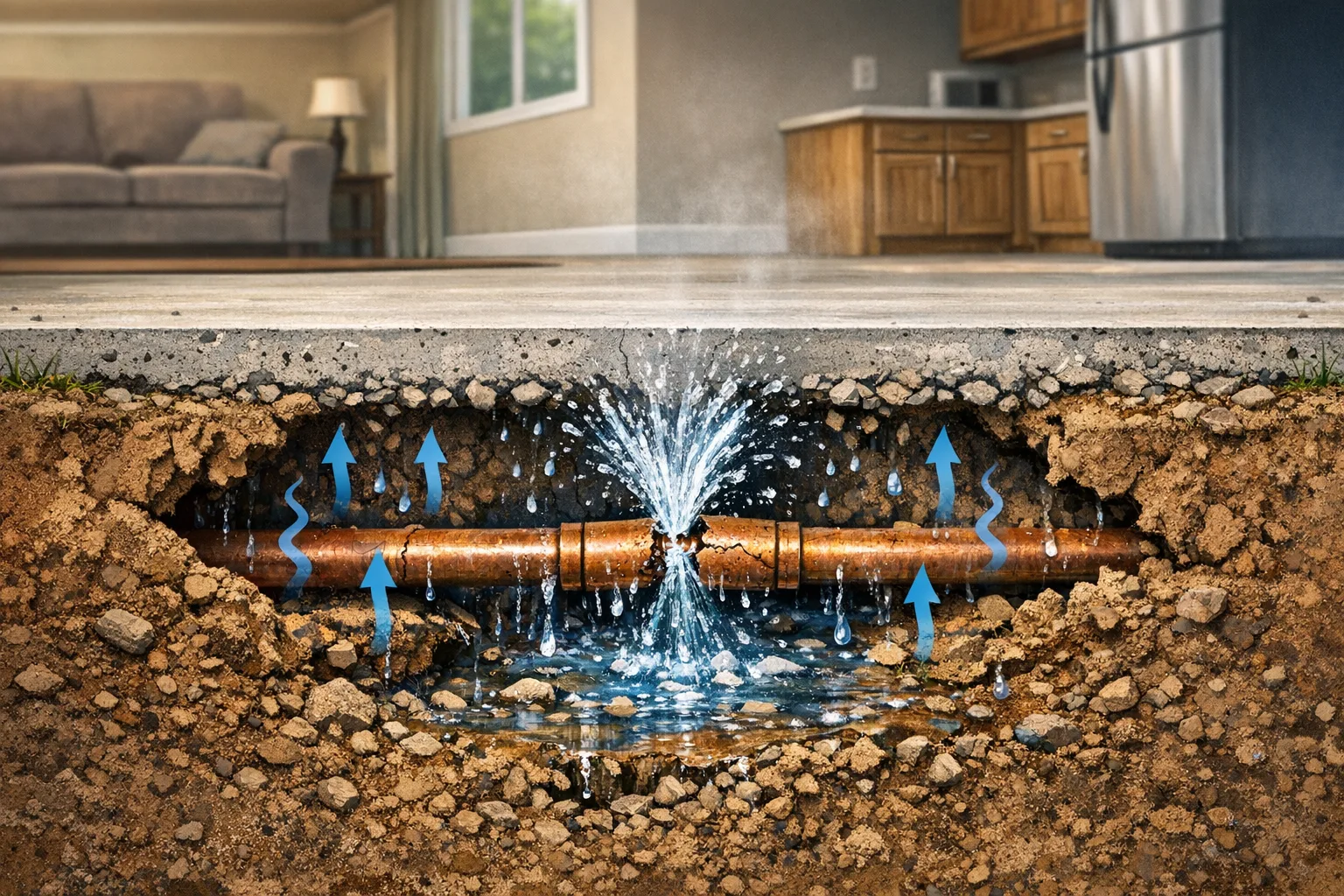
A slab leak is a water leak that occurs in the pipes running beneath your home's concrete foundation. Homes built on slab foundations — common across the Sun Belt, the Southwest, and much of California and Texas — have their hot and cold water supply lines and sometimes drain pipes embedded directly in or under a thick concrete pad. When one of those pipes cracks, corrodes, or separates at a joint, water escapes into the soil and concrete surrounding your home.
Unlike a burst pipe in your walls, which announces itself with a waterfall and plaster damage, a slab leak works quietly. The water has nowhere to go except into the ground. By the time most homeowners notice the problem, the pipe has been leaking for weeks or months. The damage is already done — to the pipe, to the soil, and to the structural integrity of the foundation itself.
As one plumbing resource explains, slab leaks represent a serious plumbing emergency precisely because the location of the pipe makes detection difficult. The pipes are hidden. The evidence is indirect. And the stakes are enormous.
Why Do Slab Leaks Happen? The Science Below Your Feet
You might assume slab leaks are caused by aging pipes alone. Age matters, but it is far from the only factor. The most underappreciated culprit is something most homeowners have never even thought about: the soil under their house.
Clay soil — prevalent across vast swaths of Texas, Oklahoma, and the broader south-central United States — is uniquely hostile to underground pipes. When clay gets wet, it expands dramatically, sometimes by 10% or more. When it dries out, it contracts. This repeating cycle of expansion and contraction places enormous pressure on pipes buried within the soil. That pressure, applied thousands of times over the life of a home, causes joints to fail, copper to fatigue, and plastic pipes to crack.
This is not speculation. Plumbing engineers have documented this cycle extensively. The technical term is differential ground movement, and it is one of the leading causes of slab leak formation in regions with expansive clay soils.
Beyond soil movement, slab leaks stem from several other causes:
- Corrosion: Copper pipes, while durable, are not immune to chemical reactions with the minerals in surrounding soil and the water itself. Over time, the outer or inner wall of the pipe thins and eventually fails.
- Abrasion: Water flowing through pipes creates vibration. That vibration, transmitted through the pipe as it rubs against concrete, gravel, or other pipes, gradually wears through the pipe wall at contact points.
- High water pressure: Excessively high water pressure stresses pipe joints and weakens pipe walls over time. If your home's water pressure is set too high, you are essentially running your plumbing system in a state of constant overwork.
- Poor installation: Pipes that were improperly installed, inadequately supported, or made from defective materials are prone to early failure.
- Chemical degradation: Highly acidic water or water with high mineral content can accelerate pipe corrosion, particularly in older homes with original plumbing.
The Silent Red Flags: 8 Signs You May Already Have a Slab Leak
Here is the uncomfortable truth about slab leaks: the earliest symptoms look like almost nothing. A slightly higher water bill. A faint warm spot on a hardwood floor. A mildew smell in one corner of the house. Most homeowners dismiss these signals. That is exactly what makes slab leaks so destructive.
Price-Quotes Research Lab has analyzed thousands of homeowner claims and service records, and the data is unambiguous: early detection is the single biggest factor in keeping repair costs manageable. Here are the eight signs you need to take seriously.
1. Your Water Bill Spiked Without Explanation
This is the most common first signal. If your water usage habits have not changed but your bill jumped by 20%, 30%, or more, something is sending water somewhere it should not go. A running toilet will show up here too, but if you have ruled out all interior fixtures, the water is going underground.
2. You Hear Running Water When All Faucets Are Off
Put your ear against the wall near your water meter. If you hear a faint hissing or rushing sound when nothing is running, that is a strong indicator of water escaping under pressure somewhere in your system. This is not a subtle clue. Take it seriously.
3. Hot Spots on Your Floor
A warm patch on your tile or hardwood floor, particularly in a localized area, often signals a hot water line leak beneath the slab. The escaping hot water heats the concrete above it, and that heat conducts through your flooring material. This is one of the more distinctive symptoms of a slab leak and one that should prompt an immediate call to a plumber.
4. Damp or Warped Flooring
Water seeping upward through cracks in the foundation will saturate your flooring from below. You may notice hardwood boards cupping, buckling, or developing gaps. Laminate flooring may bubble or separate. Tile may crack or sound hollow when you step on it. If the floor is damaged in a specific area rather than across the whole room, focus your attention there.
5. Mold and Mildew with No Obvious Source
Moisture under your slab creates a humidity environment that promotes mold growth. If you notice a persistent musty smell, see mold appearing on baseboards or walls, or experience allergic reactions that seem worse inside your home, the source could be a slab leak feeding moisture into your living space from below.
6. Foundation Cracks Appearing or Widening
This is the most structurally alarming sign. As water escapes from a cracked pipe beneath your foundation, it erodes the soil supporting the concrete. That erosion creates voids. The concrete, now spanning empty space, cracks under load. Foundation cracks are not cosmetic issues — they are load-bearing failures that can compromise the entire structure of your home.
7. Low Water Pressure Throughout the House
A significant underground leak reduces the overall water pressure available to your fixtures because water is escaping before it reaches them. If your shower suddenly runs weak or your washing machine takes forever to fill, the problem may be upstream — beneath your feet.
8. A Wet Spot on Your Lawn That Will Not Dry
This applies to homes where the yard is adjacent to the foundation. If you notice a persistently soggy patch of grass or dirt near your foundation wall, especially during dry weather, the water may be coming from a supply line leak that is surfacing before it reaches your basement or crawlspace.
How Professionals Detect Slab Leaks: Beyond the Guesswork
If you suspect a slab leak, do not reach for a sledgehammer. The days of randomly jackhammering a concrete floor to find a pipe are largely over. Modern detection technology allows professional plumbers to locate slab leaks with remarkable precision — often without destroying a single square foot of flooring.
Electronic Leak Detection
This method uses sensitive microphones and amplification equipment to listen for the sound of water escaping from a pressurized pipe. Technicians place sensors along the floor and listen for the distinctive hiss and gurgle of water under pressure. The sound travels through concrete and can be triangulated to a specific location.
Infrared Thermography
Infrared cameras detect temperature variations in floors and walls. A hot water leak creates a thermal anomaly — a warm patch — that shows up clearly on the camera even through finished flooring. This method works especially well for detecting hot water slab leaks.
Moisture Meters and Sensors
Professional moisture meters can measure the humidity levels inside walls and floors. Elevated readings in areas away from obvious water sources point toward hidden leaks.
Video Camera Inspection
For drain line leaks, plumbers can feed a small camera into the drain system to visually inspect the interior of the pipes and identify cracks, root intrusions, or joint separations.
Pressure Testing
By isolating sections of your water supply and pressurizing them with air or water, plumbers can measure pressure loss over time. A drop in pressure confirms a leak in the isolated section.
The combination of two or more of these methods typically provides enough information to pinpoint the leak location within inches, allowing for surgical precision during the repair process.
The Real Cost Breakdown: What You Will Actually Pay
Here is where this article becomes essential reading for your bank account. Slab leak repair costs vary enormously depending on the repair method, the location of the leak, the extent of the damage, and the rates in your local market.
According to cost data compiled by This Old House, homeowners across the country can expect to pay the following ranges for common repair approaches:
- Spot repair (cutting through the slab and patching the pipe): $500 to $4,000, depending on accessibility and the type of pipe. This is the most cost-effective option when the leak is isolated and accessible.
- Re-routing (abandoning the damaged section and running new pipe above ground or through walls): $1,500 to $5,000. This avoids tearing up concrete but may involve opening walls.
- Full pipe replacement (repiping the entire affected line beneath the slab): $3,000 to $15,000. This is the most comprehensive solution and is often recommended for older homes with multiple problem areas.
- Slab penetration and tunneling: $2,000 to $6,000. This involves breaking through the concrete to access the pipe, then tunneling beneath the foundation to reach the leak.
But those are just the pipe repair costs. The real financial damage emerges when you factor in everything else a slab leak destroys:
- Foundation repair: If the leak has eroded soil or caused foundation cracks, structural repair can run $2,000 to $10,000 or more depending on the severity.
- Floor and carpet replacement: Water-damaged flooring often needs complete replacement. A single room of hardwood floor replacement can cost $3,000 to $8,000.
- Mold remediation: If mold has developed in wall cavities or subflooring, professional remediation costs $1,500 to $5,000 on average.
- Water damage restoration: Replacing drywall, baseboards, and insulation damaged by sustained moisture can add another $2,000 to $10,000 to the bill.
- Increased water bills: A single slab leak can waste 1,000 gallons or more per day. At national average water rates, that translates to hundreds of dollars per month in wasted water — indefinitely, until the leak is found and stopped.
Add all of this together and a neglected slab leak can cost a homeowner anywhere from $10,000 to $25,000 or more. That is not a plumbing problem. That is a home equity emergency.
Repair Methods Compared: Which One Is Right for Your Situation?
Spot Repair
Best for: Single, isolated leaks in accessible locations where the concrete is already compromised or can be removed without major structural consequence. Spot repair is the fastest and cheapest option when the diagnosis is clear. The plumber cuts through the concrete, repairs or replaces the damaged section of pipe, and patches the concrete. The whole process may take one to three days.
Pipe Rerouting
Best for: homes where the damaged pipe runs under an area that would be expensive or impractical to excavate — for example, directly under a bathroom that has expensive tile or a load-bearing wall nearby. Instead of fixing the pipe underground, the plumber runs a new pipe above ground through walls or ceiling cavities. This avoids the mess of concrete work but may involve opening walls and ceilings.
Epoxy Pipe Coating
Best for: older copper or galvanized steel pipes with multiple small leaks or corrosion along their length. Rather than replacing the pipe, a plumber inserts an epoxy liner into the existing pipe and inflates it, creating a new interior surface that seals all the tiny leaks and corrosion points at once. This trenchless method has gained significant adoption in recent years because it avoids excavation entirely.
Full Repiping
Best for: older homes, typically more than 20 years old, where one slab leak often signals systemic pipe degradation. If your home has already experienced one slab leak, the statistical likelihood of additional failures is significantly elevated. Full repiping eliminates the problem entirely by replacing the entire underground water supply system with modern materials like PEX or copper.
The Foundation Domino Effect: Why One Leak Can Bring Down Your Whole House
This is the part of the slab leak story that separates a $2,000 repair from a $25,000 nightmare. The water escaping from a cracked pipe beneath your foundation does not just disappear.
As water pools beneath the concrete, it does two things simultaneously. First, it erodes the compacted soil that supports the foundation, creating voids where the concrete has nothing beneath it. Second, it saturates the surrounding clay, causing it to expand. The combination of voids and expansion creates uneven pressure on the foundation slab.
A foundation is designed to distribute the weight of your house evenly across the soil. When the soil support becomes uneven, the concrete bends. It cracks. It shifts. These movements transmit stress throughout the entire structure of your home. Walls crack. Door frames go out of square. Windows stick. In extreme cases, the floor itself slopes noticeably.
The connection between slab leaks and foundation failure is not theoretical. DIY repair guides explicitly warn that persistent slab leaks are one of the most common causes of foundation settlement and structural damage in slab-built homes. The foundation repair industry exists, in part, because homeowners ignored quiet water problems for too long.
The timeline from first drip to structural crisis can be as short as six months or as long as several years, depending on the size of the leak, the soil type, and how much water is flowing. There is no scenario in which waiting makes financial sense.
Prevention and Early Intervention: The Homeowner's Best Defense
You cannot eliminate the risk of a slab leak entirely — soil moves, pipes age, and water pressure fluctuates. But there are concrete steps every homeowner with a slab foundation can take to reduce their exposure and catch problems before they become structural disasters.
Monitor Your Water Bill Like a Hawk
Set up a simple spreadsheet. Every month, record your water usage. Compare it to the same month last year. If your usage is up 15% or more and you cannot explain why, you have a leak. It is that simple. Price-Quotes Research Lab consistently finds that homeowners who track their water bills catch slab leaks an average of three to four months earlier than those who do not — translating to thousands of dollars in prevented damage.
Test Your Water Pressure
Purchase a $15 pressure gauge from any hardware store. Attach it to an outdoor faucet and turn on the water. Residential water pressure should fall between 40 and 60 psi. If it consistently reads above 80 psi, install a pressure regulator to protect your pipes from the constant stress of excessive pressure.
Schedule Annual Plumbing Inspections
Especially if your home is more than 15 years old or sits on expansive clay soil. A qualified plumber can perform pressure tests, inspect accessible pipes, and identify risk factors before they become active leaks.
Know Where Your Main Shutoff Valve Is
In a major slab leak, the fastest way to stop the bleeding is to shut off the water supply entirely. Every adult in the household should know where the main shutoff valve is located and how to operate it.
Consider a Whole-Home Water Leak Detection System
Devices like leak sensors placed near water heaters, washing machines, and under sinks automatically shut off your water supply when they detect abnormal flow. Several smart home systems can send alerts to your phone the moment a leak is detected. The $200 to $500 installation cost is trivial compared to what a single day of an undetected slab leak can cost.
What to Do If You Already Suspect a Slab Leak
Stop reading this article and do three things right now, in order:
First, turn off your home's main water supply. Yes, now. If a slab leak is actively flowing, stopping the water stops the damage from worsening. You can live without water for a few hours. You cannot live with an escalating foundation repair bill.
Second, document everything. Take photos of any damp flooring, warped surfaces, cracks in walls or tile, and any visible signs of water intrusion. Note the date. This documentation matters for insurance claims and when you are negotiating with plumbers.
Third, call a licensed plumber with slab leak detection experience specifically. Not a general handyman. Not a roofer who does plumbing on the side. Slab leak detection and repair requires specialized equipment and training. Ask whether they use electronic leak detection or infrared thermography. Ask for a written estimate that itemizes detection costs separately from repair costs. And ask for references from previous slab leak jobs.
One important note on insurance: standard homeowner's insurance policies often cover sudden and accidental water damage, but the portion of a slab leak repair that involves replacing the pipe itself may or may not be covered depending on your policy language and carrier. The water damage to your floors, walls, and foundation caused by the leak is more likely to be covered. Read your policy carefully and call your agent before you sign any repair contract.
The Bottom Line: This Is Not a Problem You Can Ignore
Slab leaks are not plumbing trivia. They are not problems that will probably go away on their own. They are progressive structural threats that cost an average of $2,000 to $5,000 to repair when caught early and $25,000 or more when they are not. The average household water leak wastes nearly 10,000 gallons per year, according to the EPA's WaterSense program — and a significant portion of that waste comes from leaks that most homeowners never see.
You cannot see what is under your foundation. But you can listen to what your house is telling you. That higher water bill, that warm spot on the floor, that musty smell in the corner — your home is asking for help. Answer it before the bill multiplies.
Price-Quotes Research Lab will keep tracking the numbers on this one. The data does not lie: the homeowners who act early save five figures. The ones who wait pay for it in ways they did not budget for.