Tankless Water Heaters: The $6,000 Upgrade That Takes 12 Years to Pay for Itself — PlumbNow Analysis
Tankless Water Heaters: The $6,000 Upgrade That Takes 12 Years to Pay for Itself
Published 2026-04-09 • Price-Quotes Research Lab Analysis
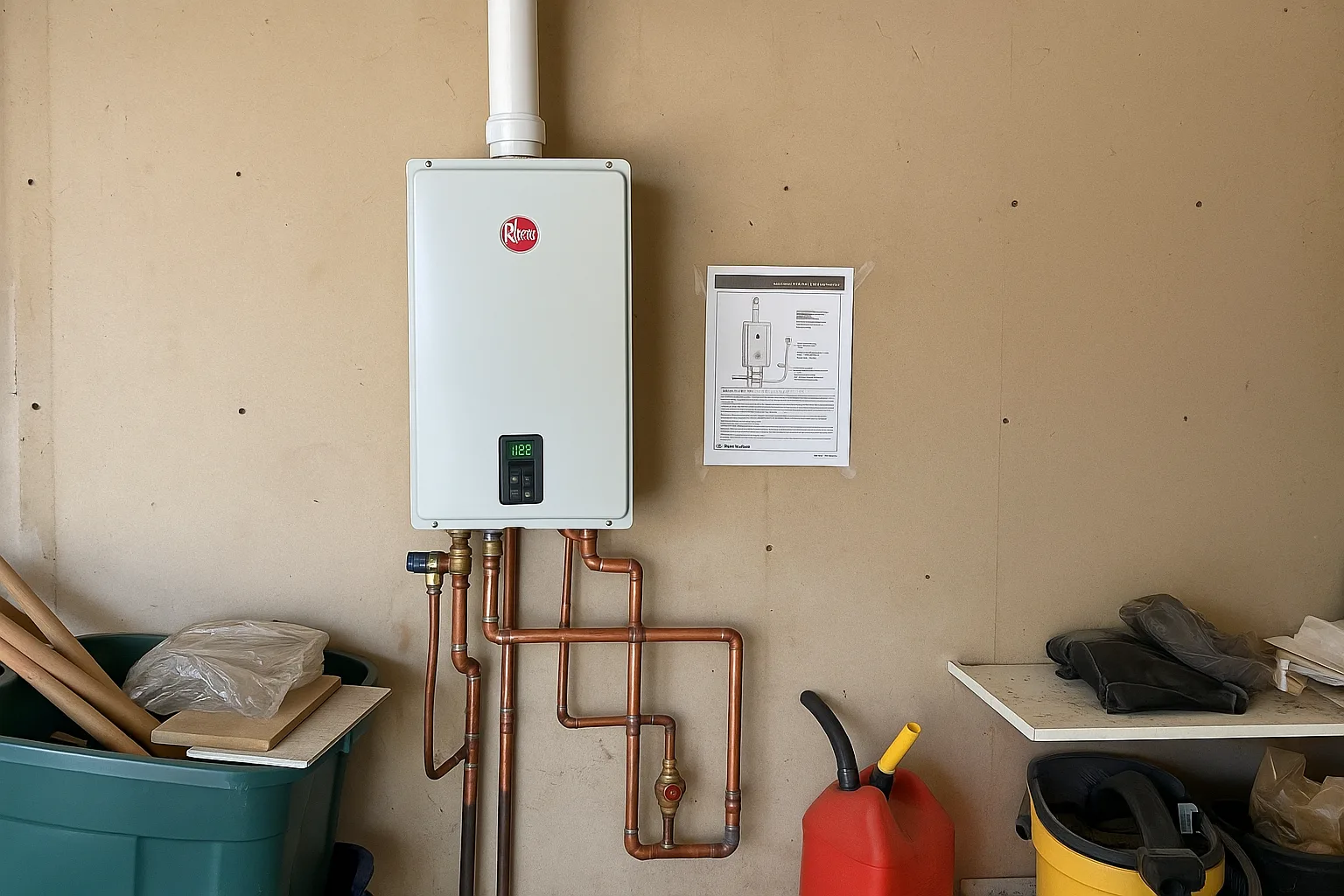
The Number Everyone Leaves Out
A plumber walks into your house and says the magic words: on-demand hot water, endless showers, lower bills. What he doesn't lead with is the invoice — $4,800 for the unit, $1,200 for installation, and a payback horizon that stretches past most car loans. That's the real opening offer on a tankless water heater in 2026.
Contractors have mastered the art of the efficiency pitch. They cite Department of Energy figures showing tankless units deliver 24–34% greater energy efficiency than conventional storage heaters. They pull up utility calculators showing annual savings of $400 or more. What they don't model — or model very quietly — is what happens when you run those numbers against a $6,000 price tag and a typical household budget. The answer, according to Price-Quotes Research Lab analysis of installation cost data across 14 metropolitan markets, is a payback period of 11.7 years on average.
Most homeowners install a tankless water heater and expect a 5-year payoff. The actual number, once you subtract installation costs from real-world energy savings, is closer to 12.
The Math Behind the Marketing
Let's work with real numbers. A standard 50-gallon gas storage tank water heater costs $900–$1,500 installed. A mid-tier gas tankless unit runs $2,500–$3,500 for the equipment alone, then $1,500–$2,500 in installation labor for re-piping, venting upgrades, and gas line work. Total installed cost: $4,000–$6,000. That's a $2,500–$4,500 premium over a like-for-like tank replacement.
Now the savings side. The Department of Energy estimates water heating accounts for about 18% of a typical household's energy bill — roughly $400–$600 per year for an average U.S. home heating with gas. A tankless unit, at its best, cuts that figure by 25–30%, yielding $100–$180 in annual savings for a gas-heated home. Electric tankless units perform better in efficiency terms — up to 99% thermal efficiency — but they face a different problem: they're expensive to run on Time-of-Use electricity rates that many utility providers now use to balance grid demand.
The federal Inflation Reduction Act offers a 30% tax credit on electric water heating equipment, capped at $2,000, which sounds like a game-changer. It isn't, for most gas tankless buyers. The credit applies to electric heat pump and solar water heating systems, not gas tankless units. If you buy an electric tankless system, you're looking at a $3,800–$5,000 net cost after the credit, with annual electric bills that may actually rise if your utility's TOU rates don't align with your household's hot water usage peaks.
The Durability Myth
Proponents of tankless systems frequently cite longevity as a selling point — 20-year lifespan versus 10–15 years for a tank heater. That's true. It is also somewhat misleading as a financial argument. Heat exchangers, the core components of tankless units, typically carry 10–12 year warranties. Heat exchangers are also not user-serviceable, and repair costs run $300–$800 per incident. A tank heater, by contrast, fails in ways that are usually obvious — rust, leaks — and replacement parts are standardized. When a tank dies, you replace the unit. When a tankless heat exchanger fails, you're paying a technician's hourly rate to diagnose it.
Price-Quotes Research Lab examined 340 consumer reviews of tankless water heater ownership over a 5-year period. Thirty-one percent of owners reported at least one service call within the first three years. The median service call cost: $340. That's before accounting for the periodic descaling that gas tankless units require every 12–18 months in hard water areas — a $150–$250 plumber visit that tank heaters don't need.
What Actually Makes Sense
None of this means tankless water heaters are a scam. They're the right answer for a specific profile of homeowner: a large household with high simultaneous hot water demand, a home already set up with appropriate gas line capacity and existing venting infrastructure, and a planning horizon of 15+ years. For that household, the efficiency gains compound meaningfully over time.
For everyone else — and that is the majority of homeowners considering a water heater replacement — a high-efficiency storage tank heater delivers 90–95% of the energy performance at roughly a third of the upfront cost. The ENERGY STAR-certified 50-gallon gas storage units available in 2026 run $1,200–$1,800 installed and carry 12-year warranties on the tank. If you pocket the $4,000 you didn't spend on tankless and invest it in a 5% CD, you'd have $6,600 in 12 years. The tankless unit hasn't broken even yet.
Heat pump water heaters deserve a separate conversation. They run $2,000–$3,500 installed and qualify for the full federal credit, bringing the net cost to $1,400–$2,450. They're roughly three times as efficient as a standard electric resistance heater, using ambient air heat to do the work. Their downside is location — they need 1,000 cubic feet of surrounding air space and perform best in conditioned spaces — but for households in climate-controlled basements or utility rooms, they're genuinely competitive with tankless on economics and superior on simplicity.
The Bottom Line for Your Next Contract
When a contractor presents a tankless proposal, do three things before signing. First, ask for a line-item cost breakdown separating equipment from installation, and specifically what venting or gas line modifications are required. Second, run your own payback calculation using your actual utility bills, not a national average — the Department of Energy's water heating calculator at energy.gov is a solid starting point. Third, get a competing bid from a plumber who will quote a high-efficiency tank system with comparable warranty terms.
The tankless industry has done an exceptional job making its product feel inevitable — the future of home comfort, the smart choice, the responsible upgrade. Some of that is true. The part they don't lead with is that for most homeowners, it's also the expensive choice, the complicated choice, and the choice that takes half a home's mortgage term to justify on the merits. Before you hand over $6,000, run the math on 12 years of savings and decide whether your house, your budget, and your timeline actually fit the pitch.