Water Softener Installation Costs: Hard Water Damage vs Treatment Investment by Region
Water Softener Installation Costs: Hard Water Damage vs Treatment Investment by Region
Published 2026-04-10 • Price-Quotes Research Lab Analysis
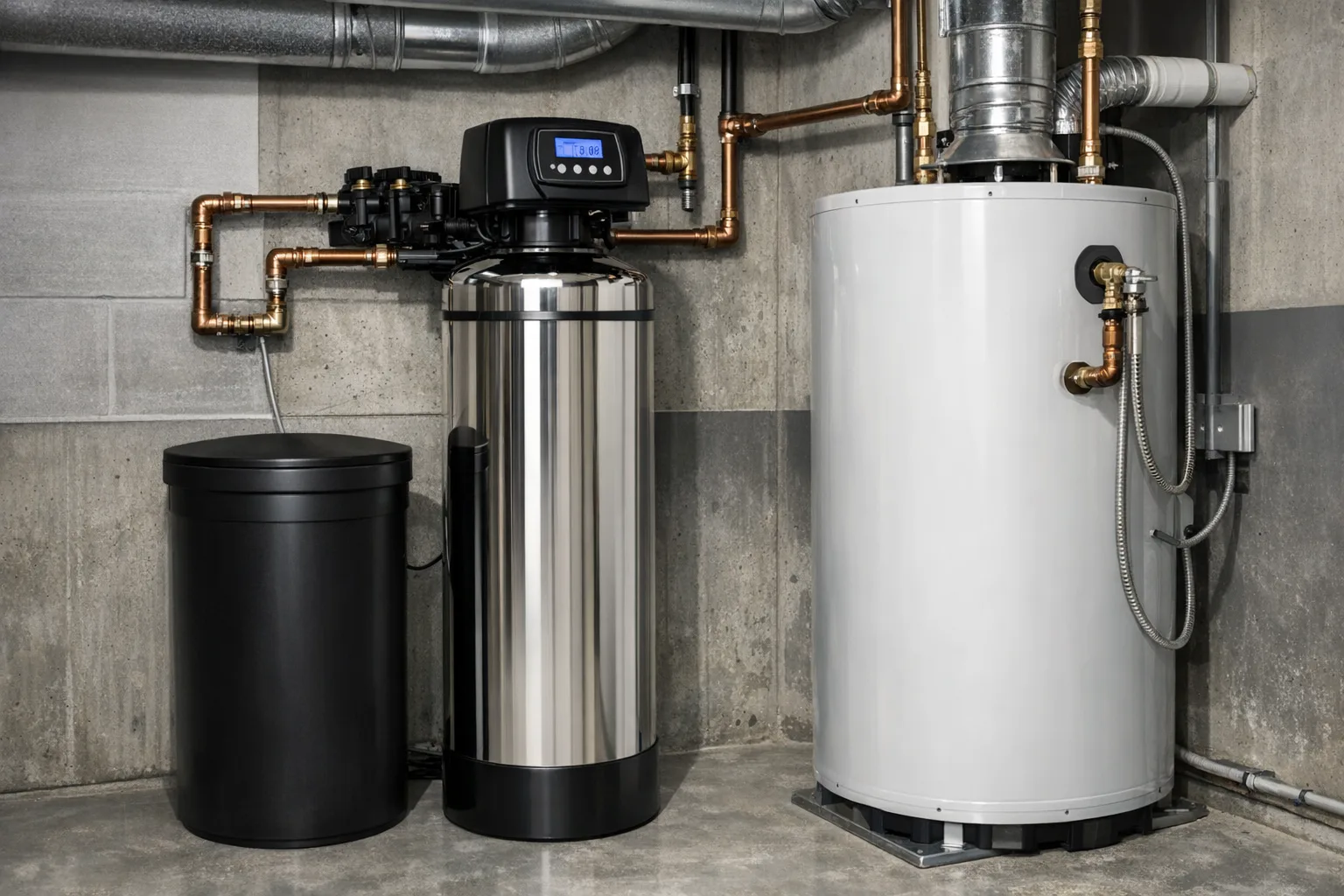
The $6,000 Question Your Plumber Wishes You'd Ask First
Hard water destroys American homes to the tune of $6,000 per household in preventable plumbing repairs, appliance replacements, and utility waste—and 85% of you are living in those households right now, according to research from SoftPro Water Systems' damage analysis. The math on water softener installation costs suddenly looks trivial when you stack it against what happens when you do nothing.
This isn't a soft-sell article about water quality. This is a cost analysis. We're comparing what you pay for a water softener system against what untreated hard water will cost you over ten years. We're breaking it down by region because geography matters—labor rates, permit fees, and water hardness levels all swing wildly from Tucson to Boston. Price-Quotes Research Lab ran the numbers.
What Is Hard Water Actually Costing You
Before we touch installation pricing, you need to understand the enemy. Hard water contains high concentrations of calcium and magnesium minerals—measured in grains per gallon (GPG). The MyHomePros cost guide breaks down exactly what these minerals do inside your home:
- Scale buildup inside water heaters cuts efficiency by 25-30%. That translates to higher gas and electric bills, every single month.
- Pipe corrosion accelerates when mineral deposits accumulate. Reduced water flow leads to pressure issues, and eventually, pipe failure.
- Appliance death. Water heaters, dishwashers, washing machines—hard water cuts the lifespan of any device that heats or moves water. Manufacturers routinely void warranties when they find scale damage.
- Soap effectiveness drops by up to 50%. You'll use more detergent, more shampoo, more everything to achieve the same cleaning results.
The HomeAdvisor cost analysis puts cumulative appliance repair and replacement costs for hard water households at $2,000-$6,000 over a decade. Add in efficiency losses—your water heater working 25% harder than it should—and you're looking at $200-$400 in annual utility overage.
2026 Water Softener Installation Cost Breakdown
Here's where it gets concrete. Water softener installation costs in 2026 fall into a range, and the variance depends on system type, home configuration, and—crucially—where you live. AskDoss's 2026 pricing data gives us the national baseline:
Total installed cost: $1,000 - $3,000 That's the all-in number—system plus professional installation. If you're wondering whether you can DIY this, the short answer is yes if you're comfortable with plumbing, but the professional install premium often buys you warranty coverage, proper calibration, and code compliance. The EasyWindowCost comprehensive guide breaks down pricing by system type: Ion exchange remains the gold standard for whole-house treatment. Salt-free systems have gained market share, but they work differently—template-assisted crystallization doesn't actually remove minerals, it just changes their structure to prevent scale. For genuinely hard water (above 7 GPG), ion exchange delivers superior results. This is where regional variation kicks in, and the differences are substantial. SoftPro's location-based analysis identifies four major cost drivers that vary by geography: Quality Water Treatment's regional pricing breakdown confirms these factors create installation cost spreads of $500-$1,500 for identical systems in different markets. Arizona, Nevada, Texas, and New Mexico face the hardest water in the continental United States. The Colorado River watershed picks up mineral content as it flows through limestone terrain, and arid conditions concentrate everything as water evaporates. Aquasure USA's 2026 pricing guide notes that Phoenix-area homes routinely see 15-25 GPG hardness. Installation costs: $1,400 - $2,500 (higher-capacity systems drive unit costs up) You need a robust system here. A bargain-basement softener will struggle and die prematurely. Budget for a quality 48,000-grain unit minimum. The upside: longer periods between regeneration cycles due to dry climate humidity levels. The Great Lakes region presents a different challenge. Water hardness ranges from moderate (4-7 GPG in areas near Lake Michigan) to hard (10-15 GPG in Iowa, parts of Illinois, and the Dakotas). Inch Calculator's cost data shows Midwest installations fall right at the national median. Installation costs: $1,200 - $2,200 Older housing stock in Midwestern cities creates accessibility challenges. Basement installations are standard, which simplifies the work, but aging pipes may require additional plumbing updates to accommodate a new system. Budget an extra $200-$500 for potential pipe modifications. New England and the Mid-Atlantic states present a paradox: relatively moderate water hardness (4-10 GPG in most areas) but aging infrastructure that responds poorly to any additional mineral stress. Homewyse's cost calculator factors in regional labor premiums for this area. Installation costs: $1,500 - $2,800 Massachusetts and New York require licensed plumbers for water softener installation and mandate inspections. This adds $200-$500 to project costs but ensures code compliance. Given the age of housing stock in cities like Boston and Philadelphia, budget for plumbing updates. California, Oregon, and Washington present a split landscape. Coastal areas often have relatively soft municipal water, while inland valleys—Central Valley California, eastern Washington—face hardness levels comparable to the Southwest. Design Transition Studio's regional analysis confirms West Coast installation costs lead the nation. Installation costs: $1,600 - $3,000+ California's Title 24 energy standards affect water heater requirements, which can complicate softener integration. Portland and Seattle have relatively straightforward installation processes but face labor shortages that push costs up. The HellaWater 2026 installation guide notes that high-demand periods in Pacific Northwest markets create booking delays of 2-4 weeks. Price-Quotes Research Lab analyzed cumulative costs over ten years. Here's the comparison: The payback period for a properly sized water softener ranges from 3-6 years depending on local water hardness and utility rates. Quality Water Treatment's ROI calculator confirms this math for most American households, with faster payback in areas where water hardness exceeds 10 GPG. Every cost guide lists the obvious expenses. None of them warn you about the stuff that actually shows up on your invoice. KindWater's installation guide identifies these common add-ons: The TapWaterData installation guide recommends requesting a complete walkthrough with your installer before signing any contract. Get line-item pricing. A $300 difference in the initial bid often reflects omitted scope, not different contractor quality. Let's talk specifics. At the $2,000 investment level—right in the sweet spot of the national average—you should expect: You do not need to spend $4,000-$6,000 for a residential installation unless you have a large home, exceptionally hard water, or want a dual-tank system for uninterrupted soft water flow. Most households will never notice the difference between a $1,500 and a $3,000 system in daily use. Based on hardness levels, installation costs, and long-term damage exposure, here's our regional breakdown: Southwest (AZ, NV, TX, NM): High priority. Water hardness demands action. Budget $2,000-$2,500 for a 64,000-grain system. The ROI here is the fastest in the country. Rocky Mountain States (CO, UT, WY): High priority. Similar hardness challenges to the Southwest. Installation costs run slightly lower due to reduced permit complexity. Great Plains (KS, OK, NE, SD, ND): High priority. Groundwater in this region carries significant mineral load. Mid-range system costs, strong payback. Midwest (IA, IL, IN, OH, MI, MN, WI): Moderate priority. Check your specific hardness level before investing. The SoftPro damage analysis shows Midwest payback periods run 4-6 years at moderate hardness levels. Southeast (FL, GA, SC, NC, AL): Variable. Coastal areas often have acceptable water quality. Inland areas with private wells face significant hardness challenges. Know your numbers before spending. Northeast (ME, NH, VT, MA, RI, CT, NY, NJ, PA): Moderate priority for municipal water users. Private well users in this region face higher hardness—act accordingly. The installation cost premium is real, but so is the infrastructure age problem. West Coast (CA, OR, WA): Know your local water report. Coastal municipal systems often provide adequately treated water. Inland areas need systems. Budget for the premium installation costs if you proceed. Hard water doesn't negotiate. It doesn't care about your budget or your belief that the problem isn't that bad. It deposits minerals on every surface it touches, year after year, until your water heater dies, your pipes clog, or your appliances fail. A water softener installation costs $1,500-$2,200 for most American homeowners in 2026. That investment pays for itself in 3-6 years through prevented repairs, restored efficiency, and extended appliance lifespan. The math works. The only variable is whether you do it before or after the damage accumulates. Price-Quotes Research Lab recommends getting a professional water hardness test before you buy anything. That's a $15-$50 investment that ensures you purchase the correctly sized system. Overspending on capacity wastes money. Undersizing guarantees regret. Your move.
Most common range: $1,500 - $2,200
System Type Pricing
System Type Unit Cost Installation Total
Ion Exchange (Single Tank) $500 - $1,700 $200 - $500 $700 - $2,200
Dual Tank System $1,000 - $5,000 $300 - $800 $1,300 - $5,800
Salt-Free System $800 - $2,500 $200 - $600 $1,000 - $3,100
Reverse Osmosis (point-of-use) $300 - $1,500 $150 - $400 $450 - $1,900
Why Your Zip Code Changes Everything
Regional Installation Cost Analysis
Southwest: The Hardest Water in America
Labor: $75-$110/hour
Permit complexity: ModerateMidwest: Moderate Hardness, Variable Infrastructure
Labor: $65-$95/hour
Permit complexity: Low to moderateNortheast: Aging Infrastructure Meets Hard Water
Labor: $90-$150/hour
Permit complexity: High in Massachusetts, New York; moderate elsewhereWest Coast: Premium Pricing, Premium Water
Labor: $100-$180/hour
Permit complexity: High in CaliforniaDo the Math: When Does a Water Softener Pay for Itself?
No Softener Scenario
With Softener Installed
Hidden Installation Costs That Will Surprise You
What $2,000 Gets You in 2026
Regional Recommendations by Price-Quotes Research Lab
The Bottom Line
Key Questions
How much does water softener installation cost in 2026?
Does a water softener pay for itself over time?
Which region has the highest water softener installation costs?
What hardness level requires a water softener?
What's the difference between salt-based and salt-free water softeners?
Are there hidden costs in water softener installation?
Related Services