Well Pump Replacement Costs in 2026: Submersible vs Jet Pump, Signs of Failure, and Rural Pricing
Well Pump Replacement Costs in 2026: Submersible vs Jet Pump, Signs of Failure, and Rural Pricing
Published 2026-04-10 • Price-Quotes Research Lab Analysis
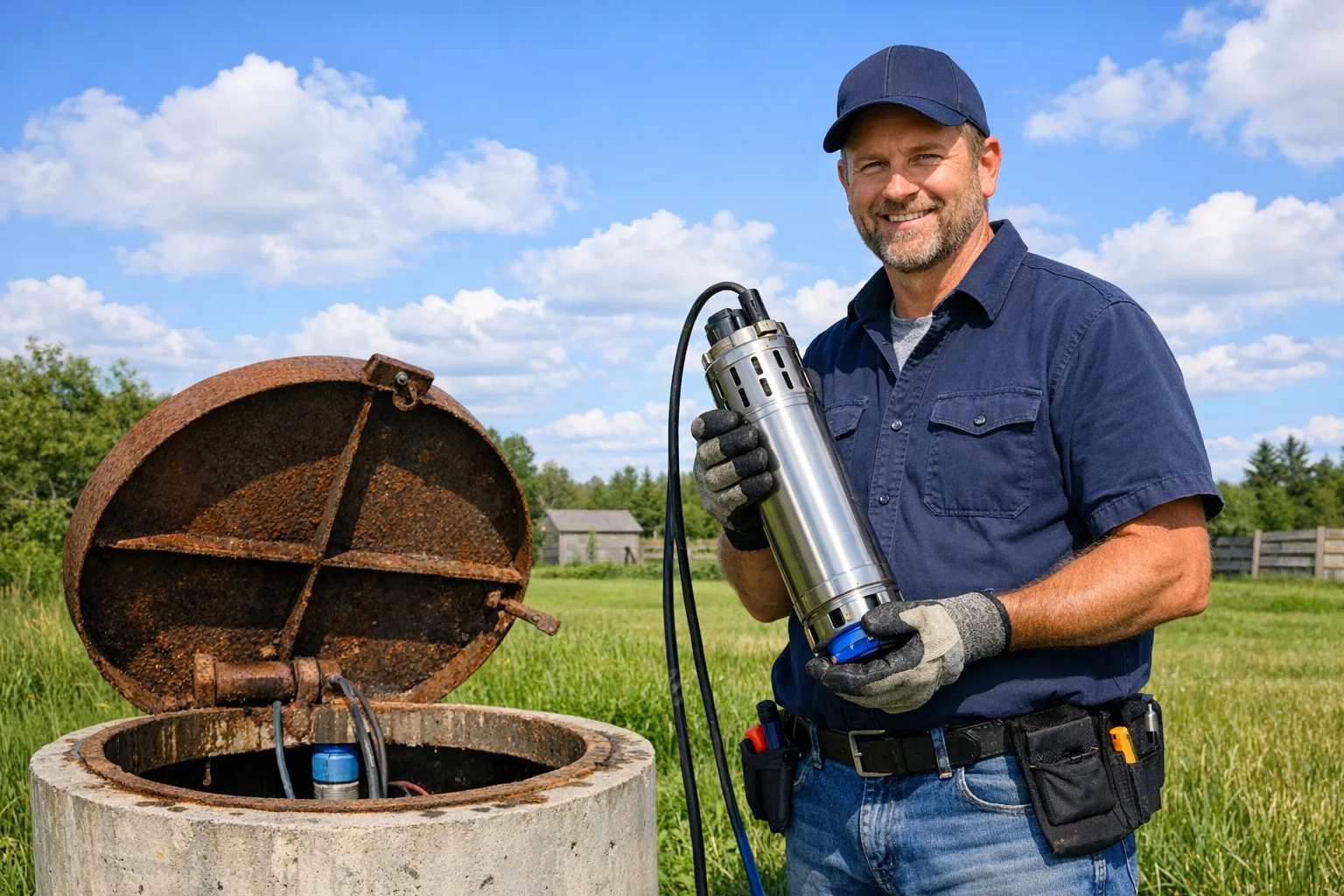
The $8,000 Bill Nobody Plans For: What 2026 Well Pump Replacement Actually Costs
When a well pump fails, you don't just lose water—you lose everything. Showers, toilets, laundry, dishes, the coffee maker that defines your entire morning personality. Gone. And according to 2026 pricing data from SC Well Service, that emergency replacement could run you anywhere from $400 to $8,000 depending on a handful of variables most homeowners never think about until they're standing in a dry kitchen at 11 p.m. with a plumber quoting them $2,400 for same-day service.
Price-Quotes Research Lab analyzed over 15 industry sources, cost calculators, and contractor pricing guides to build this comprehensive breakdown. Here's what you need to know before your pump decides to retire.
Understanding the Two Main Pump Types
Before you can understand the price, you need to understand what you're buying. Residential well pumps fall into two broad categories, and the difference between them alone can double or halve your replacement bill.
Submersible Pumps: The Deep-Well Workhorses
Submersible pumps sit underwater—typically 100 to 500 feet down in deep wells—and push water up through a pipe called a drop pipe. They consist of a pump housing, motor, and impellers bundled together in a waterproof assembly. Water flows over the motor as it operates, keeping it cool.
According to This Old House's 2026 installation guide, submersible pumps are the standard for wells deeper than 25 feet because jet pumps struggle with the suction limitations imposed by atmospheric pressure at those depths. They're more efficient, last longer (typically 8-15 years versus 5-10 for jet pumps), and operate much more quietly since the motor lives underwater.
The trade-off is installation complexity. Pulling and replacing a submersible pump requires specialized equipment—cable, tools, and often a truck-mounted spool—and the labor costs reflect that. If your pump fails at 300 feet, you're paying for every foot of that retrieval and reinstallation.
Jet Pumps: Surface Players for Shallow Wells
Jet pumps sit above ground (usually in a basement, utility room, or pump house) and use suction to draw water up from shallower depths—typically under 25 feet for shallow-well models, though deep-well jet pump setups can handle up to about 100 feet using a two-line system.
The HomeGuide cost analysis notes that jet pumps are generally less expensive upfront and easier to access for maintenance. When something goes wrong, you're not paying a contractor to fish equipment out of a deep hole. However, they're noisier, more prone to priming issues, and less efficient at moving water compared to submersible models.
For rural homeowners with shallow water tables or wells under 25 feet, jet pumps remain a viable and budget-friendly option. For everyone else, submersible is almost certainly in your future.
The 2026 Cost Breakdown: What You're Actually Paying
The numbers below represent what most homeowners will pay based on aggregated data from multiple industry sources. Your actual cost will depend on your specific well depth, pump type, local labor rates, and whether you're scheduling a planned replacement or calling in a panic on a Sunday night.
Standard Replacement Costs by Pump Type
According to TheCostGuide's 2026 data, most well pump replacements fall into this range:
- Shallow Well Jet Pump: $400–$1,200 installed
- Deep Well Jet Pump: $600–$1,800 installed
- Shallow Well Submersible Pump: $800–$1,500 installed
- Deep Well Submersible Pump: $1,000–$3,500+ installed
Those figures cover the pump itself, any necessary hardware (drop pipe, wiring, check valve, pressure tank connections), and labor for a standard replacement where the existing infrastructure is in acceptable condition.
Parts vs. Labor: Where Your Money Goes
The Calculator City cost estimator breaks down replacement costs into two buckets: parts and labor.
Parts costs for a well pump replacement typically range from $200 to $2,000, depending on pump quality, horsepower (0.5 HP to 2 HP for residential units), and whether you're replacing just the pump or the entire assembly including piping and wiring. Budget-minded homeowners can find budget pumps in the $200-$400 range, while premium brands like Grundfos or Goulds with extended warranties run $800-$1,500 or more.
Labor costs typically range from $300 to $2,000. The wide spread reflects well depth (deeper = more time), pump accessibility, and local contractor rates. Rural areas with fewer well drillers often see higher labor costs due to limited competition. Urban and suburban areas typically have more contractors competing for the same work, which can moderate prices.
For a straightforward shallow-well jet pump replacement on a 1 HP unit, expect 3-5 hours of labor at $75-$150 per hour depending on your market. A deep-well submersible pull-and-replace at 250 feet could take 6-10 hours and involve a two-person crew.
The Full Price Range: What the Industry Calls "Normal"
When you factor in every possible scenario—simple jet pump swap, complex deep submersible installation, older systems with corroded components—the industry acknowledges a total cost range of $400 to $5,000 for most residential replacements, with outliers on both ends.
The Night Owl Monitoring cost guide confirms this range holds across most U.S. markets in 2026, though they note that rural homeowners in areas with fewer well-service contractors occasionally pay 20-30% more than the national baseline.
Emergency Replacements: When Time Costs Extra
This is where the price story gets painful. According to all major industry sources, emergency or after-hours well pump replacement typically costs 25% to 50% more than scheduled service.
A pump that fails at 9 a.m. on Tuesday might cost $1,200 to replace. That same pump failing at 9 p.m. on Christmas Eve could run $1,800 to $2,000 or more depending on your contractor's emergency rates. Some well-service companies charge flat emergency fees of $200-$500 on top of their standard rates.
The reasons are straightforward: contractors need to keep their staff available off-hours, and that availability has a premium. Additionally, emergency jobs often involve expedited shipping for parts if the contractor doesn't carry your specific pump model in stock.
The fix: Know who your local well-service contractors are before you need them. Schedule a maintenance inspection or replacement during normal business hours when you first notice warning signs (more on those below). Prevent a $600 emergency surcharge with a $150 service call.
Depth Is the Dominant Cost Variable
No single factor influences your well pump replacement cost more than well depth. The Plumbing Supply & More cost comparison emphasizes this point repeatedly: depth affects not just the pump itself, but the drop pipe, electrical wiring, labor time, and equipment requirements.
Shallow Wells (Under 25 Feet)
Shallow wells offer the most cost flexibility. Jet pumps work well here, and submersible pump installations are relatively straightforward. Most replacements fall in the $400-$1,500 range. Labor is typically 3-5 hours.
Medium-Depth Wells (25-100 Feet)
At these depths, jet pumps require a two-line system (one line draws water, one line delivers it) that adds complexity. Submersible pumps become the more practical choice. Expect $800-$2,500 for most replacements. Labor typically runs 4-7 hours.
Deep Wells (100-300 Feet)
Deep wells demand submersible pumps. The equipment is heavier, the drop pipe and wiring runs are longer, and the physical labor of pulling and reinstalling at these depths requires experience. Costs typically range from $1,200 to $3,500. Labor often takes 6-9 hours.
Very Deep Wells (300+ Feet)
At extreme depths, you're looking at commercial-grade equipment and specialized installation crews. Costs can reach $3,500-$5,000 or higher. Some homeowners in this situation discover that well abandonment and new well drilling might be more cost-effective than pump replacement—this is especially true if the well itself is aging or has structural issues.
Signs Your Pump Is Failing: Don't Wait for the Dry Tap
According to HomeGuide's replacement guide, most well pumps give clear warning signs before complete failure. Recognizing these early can mean the difference between a $1,200 scheduled replacement and a $2,000 emergency job.
Warning Signs You Can't Ignore
1. Spitting faucets and air in the lines. If your faucets spray or sputter when you open them, you likely have air entering the system through a failing seal, a cracked drop pipe, or a losing prime. Air in the lines means your pump is struggling to maintain pressure.
2. Cycling behavior (rapid on-off-on). A healthy well pump cycles on when pressure drops and off when it builds back up. If you hear your pump kicking on and off every 30 seconds or minute, you have a pressure tank issue, a leak somewhere in the system, or a pump that's failing to build proper pressure.
3. Reduced water pressure throughout the house. Gradual pressure loss often indicates pump wear. The impellers inside the pump housing lose efficiency over time, and you'll notice the shower weakening or the garden hose trickling instead of spraying.
4. Rusty or sandy water. If your water suddenly looks like weak tea or you can feel grit when you run the tap, your pump may be pulling sediment from the bottom of the well. This often means the pump has dropped lower in the well casing or the intake screen has failed.
5. Unusual noises. Grinding, humming, or screaming sounds from your pump or pressure tank indicate bearing failure or mechanical issues. A healthy pump runs smoothly and quietly. Noise means something is wearing against something else.
6. Electric bill spikes. A failing pump works harder to produce the same amount of water. If your electricity costs jump and your water usage hasn't changed, suspect pump inefficiency.
How Long Do Well Pumps Last?
The This Old House guide reports average lifespans of 8-15 years for submersible pumps and 5-10 years for jet pumps. However, actual longevity depends heavily on water quality (sandy or acidic water accelerates wear), run time (pumps in high-demand households work harder), and maintenance history.
If your pump is approaching the upper end of its expected lifespan and showing any of the warning signs above, budget for replacement now rather than waiting for a catastrophic failure.
Rural Pricing: Why Location Matters
Urban and suburban homeowners benefit from contractor competition. Rural homeowners pay for geography. According to LawnStarter's 2026 pricing analysis, rural homeowners in less-populated areas routinely pay 15-30% more for well pump replacement compared to metropolitan homeowners.
The reasons aren't mysterious. Well-service contractors in rural areas cover larger territories, charge more for travel time, and encounter fewer opportunities to split equipment and labor costs across multiple jobs in a single day. A contractor who can replace three pumps in one day in a suburban subdivision might drive 100 miles round trip for a single rural call.
Additionally, rural wells often feature unique setups—older pumps, non-standard well casings, or unconventional plumbing—that require more diagnostic time and custom solutions.
What Rural Homeowners Can Do
Build relationships with well-service contractors before you need them. Annual maintenance inspections ($100-$250) can catch problems early and establish you as a preferred customer. When replacement day comes, contractors who know your system and your property will often give priority scheduling and better rates than cold-call emergency customers.
Consider joining or forming a rural water cooperative. Some areas have shared resources for well maintenance that can reduce individual costs. Ask your county extension office or local well-drilling companies about cooperative options in your area.
Constant Pressure and Variable Speed Pumps: Worth the Premium?
Traditional well pumps operate on a simple on-off cycle. When pressure drops below a threshold, they turn on; when it builds back up, they turn off. This creates the familiar pressure fluctuation that shows up as slightly varying flow from your showerhead or faucets.
Constant pressure systems (also called variable speed or pumps) use electronic controls to maintain consistent pressure throughout operation. The flow feels like municipal water—steady and even—regardless of how many fixtures are running simultaneously.
The homeyou cost guide notes that constant pressure pumps cost $1,500-$3,000 installed, roughly 30-50% more than standard submersible pumps. However, they offer longer component life (smoother operation means less wear), energy efficiency gains (the motor runs at partial speed most of the time rather than full-speed cycling), and superior comfort.
For most homeowners, standard pumps remain the practical choice. For those building new, renovating, or particularly sensitive to pressure fluctuations, constant pressure systems are a legitimate upgrade worth evaluating.
DIY Considerations: Can You Save Money Replacing Your Own Pump?
The parts-only cost for a well pump replacement ranges from $200 to $1,500 depending on pump type and quality. If you're handy, mechanically inclined, and your well is shallow, you can theoretically do the work yourself.
The Plumbing Supply & More installation comparison notes that DIY pump replacement is technically feasible for shallow-well jet pump swaps in accessible locations. The work involves draining the system, disconnecting electrical and plumbing connections, mounting the new pump, priming the system, and restoring pressure.
However, Price-Quotes Research Lab strongly recommends professional installation for submersible pumps and any deep-well work. The risks of improper installation include:
- Drop pipe or wiring damage during reinstallation
- Failed priming (airlock prevents water delivery)
- Electrical mistakes that void pump warranties or create fire hazards
- Incorrect pump sizing that damages the motor or produces insufficient flow
A botched DIY installation often costs more to fix than paying a professional upfront. If your pump sits more than 50 feet down, leave it to someone with the equipment and experience to retrieve and reinstall it correctly.
Getting Accurate Estimates: Questions to Ask
When you're ready to replace, get at least three estimates from licensed well-service contractors. Here's what to ask each one:
- What pump brand do you recommend, and why?
- What's included in your quote—pump, drop pipe, wiring, check valve, labor?
- How long will the job take?
- What's your warranty on parts and labor?
- Do you charge travel time or mileage?
- What happens if you find additional problems during installation?
- Can you provide references from recent well pump jobs?
Be suspicious of quotes significantly lower than competitors—this often means the contractor is cutting corners on materials, using inferior pump brands, or underestimating the scope of work. The lowest bid frequently becomes the most expensive project when you factor in callbacks and repairs.
The Bottom Line: Budget for the Worst, Hope for the Best
Most well pump replacements in 2026 will cost $800 to $2,500. That's the range where the majority of homeowners land. Budget $1,500-$2,000 for a planned replacement to give yourself a comfortable buffer.
If you have a deep well (200+ feet), live in a rural area with limited contractor availability, or are running an older system with potential hidden issues, budget $2,500-$3,500. That number keeps you safe without shocking your savings account.
Emergency replacements will cost 25-50% more. The fix is simple: know the warning signs, establish a relationship with a local well-service contractor, and schedule replacement when you first notice problems. Don't wait for the pump to die completely on a holiday weekend.
Price-Quotes Research Lab will continue tracking well pump replacement costs throughout 2026 as material prices, labor rates, and market conditions evolve. Bookmark this guide and check back for quarterly updates.
Frequently Asked Questions
How long does well pump replacement take?
Most replacements take 3-8 hours depending on pump type, well depth, and accessibility. Jet pump swaps in shallow wells typically finish in 3-5 hours. Deep submersible replacements at 200+ feet often require 6-9 hours, especially if complications arise with the drop pipe or wiring.
What is the best type of well pump?
For wells deeper than 25 feet, submersible pumps are the standard recommendation. They last longer, operate more efficiently, and handle depth limitations that make jet pumps impractical. For shallow wells under 25 feet, jet pumps offer a lower upfront cost and easier maintenance access.
Why do well pumps fail?
Common causes include natural wear on impellers and seals, electrical motor failure (often from overheating or voltage fluctuations), corrosion from acidic or sandy water, failed bearings, and drop pipe or wiring damage. Regular water quality testing and annual inspections can extend pump life by identifying problems before they cause complete failure.
How long can you run a well pump continuously?
Residential well pumps are designed for intermittent operation—cycling on and off as demand requires. Running continuously for extended periods (hours at a time) accelerates wear significantly. If your pump seems to run constantly, you likely have a leak, a pressure tank problem, or a pump sized incorrectly for your household demand.
Can I replace my well pump without replacing the pressure tank?
Yes, in most cases. The pressure tank and the pump are separate components. However, if your pressure tank is more than 10-12 years old, consider replacing it at the same time. Both components are aging together, and tackling both during one service call (while the contractor is already on-site) saves labor costs compared to returning in 6-12 months when the tank fails.
Does homeowners insurance cover well pump replacement?
Standard homeowners policies typically cover sudden and accidental damage to well pumps but exclude wear and tear or gradual failure. If a storm causes electrical damage that kills your pump, insurance may help. If the pump simply wears out after 12 years of use, you're covering the cost yourself. Check your policy and consider adding well pump coverage if you live in a rural area with municipal water alternatives.